Diffrent Food Style

Chicken Parm vs Eggplant Parm: Which Should You Order?
Chicken Parm vs Eggplant Parm

Chicken Parm vs Eggplant Parm: Which One Should You Order?

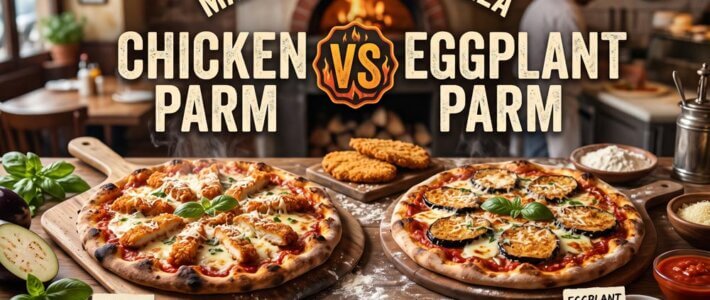
Two lines on the same menu, usually a dollar or two apart. Same red sauce, same blanket of melted mozzarella, same bed of pasta underneath. Chicken parm vs eggplant parm is the kind of decision people make in about four seconds, almost always on instinct, and almost always the same way every single time.

Here is the thing that surprises most people though. The eggplant came first. By a long way. Chicken parm is the newer invention, and it only exists because of what happened when Italians moved to America.

That history actually explains a lot about how the two dishes taste. Let me explain.

The Eggplant Is the Original

Melanzane alla parmigiana is a genuine Southern Italian dish, strongly associated with Campania and Sicily. Sliced eggplant, fried, layered with tomato, basil and cheese, then baked. It has been made that way for a very long time.

Eggplant grows abundantly in hot Southern Italian climates, which is the practical reason it became the base. Meat was expensive. Vegetables were not. So the dish that became famous was built around what people actually had.

When Italian immigrants arrived in America in the late 1800s and early 1900s, the economics flipped. Meat was suddenly cheap and plentiful, in a way it had never been back home. So the technique got applied to chicken cutlets, and later veal, and the new version took off. It is one of the clearest examples of how Italian cooking changed after crossing the Atlantic: same method, different protein, driven entirely by what the market offered.

There is a small wrinkle in the name too. Despite the parmigiana, most versions lean on mozzarella with only a dusting of actual parmesan. The name probably refers to the layering technique rather than to the cheese, though food historians argue about this and probably always will.

How They Are Actually Built

The two dishes diverge more in the kitchen than the menu suggests.

Chicken parm starts with a breast pounded thin, dredged in flour, dipped in egg, coated in seasoned breadcrumbs, then fried. The cutlet goes in a dish, gets topped with sauce and mozzarella, and goes under heat just long enough to melt. It is assembled as single portions.

Eggplant parm is usually layered like a casserole. Rounds of eggplant are salted first to draw out moisture and bitterness, then breaded and fried, then stacked with sauce and cheese in a baking dish and baked properly, often for half an hour or more. It comes out as a tray you cut from, not a plate you build.

That difference, single portion versus layered tray, is the one that matters most for how they behave. More on that shortly.

Taste and Texture, Honestly Compared

Chicken parm is the firmer, more structured of the two. The cutlet holds its shape, the breading stays reasonably crisp at the edges if it was fried properly, and you get a clear contrast between the crunchy outside and the tender meat. It tastes savoury and straightforward.

Eggplant parm is softer and sweeter. Fried eggplant turns almost custardy in the middle, and baking it under sauce for half an hour takes it further in that direction. The flavour is deeper and slightly sweet, with a faint earthiness underneath. It is less about contrast and more about everything melting into one thing.

People who love it love exactly that. People who do not usually had a badly made one, which is worth saying plainly: eggplant parm is the easier dish to ruin. Skip the salting step and the result is bitter and watery. Fry it at the wrong temperature and the slices drink oil like a sponge. A great eggplant parm takes more care than a great chicken parm.

Chicken Parm vs Eggplant Parm at a Glance

FeatureChicken ParmEggplant Parm
OriginItalian American, early 1900sSouthern Italy, much older
BasePounded chicken cutletSliced, salted eggplant
BuildSingle portion, assembledLayered tray, baked
Cooking timeQuick, melt the cheese30 minutes or more in the oven
TextureFirm, crisp edgesSoft, almost custardy
FlavourSavoury, meatySweeter, earthy
VegetarianNoYes, if cheese is acceptable
Travels well?Fair, breading softensBetter, it was already soft
Easy to ruin?Not reallyYes, if the eggplant is not salted

So Which One Should You Order?

  • Want the crunch? Chicken, and ask for the sauce on the side if you are taking it home. That keeps the breading from going soft on the drive.
  • Taking it home anyway? Eggplant holds up better. It was never crisp to begin with, so there is nothing to lose.
  • Vegetarian at the table? Eggplant, obviously. It is one of the few genuinely satisfying vegetarian options on most Italian American menus.
  • Feeding a crowd? Eggplant, because it is already built as a tray. Chicken parm by the tray means twenty cutlets fried individually, which is a lot more work and usually costs more.
  • Never had eggplant parm? Order it somewhere that makes a lot of it. A place that sells two a week will not have the technique down.

And if you genuinely cannot choose, a lot of kitchens will do a half and half platter. It is not on most menus, but it is a common enough request that nobody blinks at it.

A customer who orders for her office once a month told us how she handles it. “I used this as my default now. I get the eggplant tray because half the office does not eat meat, and I add a few chicken cutlets on the side for the ones who complain. Nobody has complained in a while.” Our customers are really happy with the eggplant parm, and what we hear most is that people who thought they disliked eggplant changed their minds after trying it properly made.

What to Put Alongside It

Both dishes are rich, and what sits next to them matters more than people allow for.

The default is spaghetti or linguine with a little extra sauce, and there is nothing wrong with that. But it doubles down on the same flavours. A sharply dressed green salad with plenty of vinegar does more for the plate, because the acid cuts straight through the fried breading and the cheese. Sauteed broccoli rabe or spinach with garlic works the same way and feels less like a side dish nobody asked for.

Roasted potatoes are an underrated pairing with chicken parm specifically, especially if you are skipping pasta. And a glass of something with acidity, a Chianti or even a dry white, resets the palate between bites better than a heavy red does.

One more thing on portions. A parm platter is genuinely large at most Italian American places, often a full cutlet plus a mound of pasta. If you are ordering several dishes for a table, count on people eating less of each than they planned. Two platters and a shared side usually feeds three comfortably.

The Sandwich Question

Both of these also live a second life between bread, and the rules change slightly when they do.

A chicken parm hero is one of the great lunches, but it needs a sturdy roll. The sauce and the melted cheese will destroy soft bread within minutes. A crusty Italian loaf handles it. A soft sub roll turns to paste.

Eggplant parm on a roll is softer all the way through, which some people love and others find a bit one note. It also tends to be messier, because the layers slide. Worth asking for it pressed or toasted if that is an option.

Regional naming comes into play here too, since what you call that sandwich depends entirely on where you grew up. We pulled that apart in a piece on hero versus sub versus hoagie, and the short version is that a parm sandwich answers to all of them.

Making Either at Home

Both are weeknight doable, though the eggplant needs planning.

For eggplant, salt it first. Slice about a quarter inch thick, lay the rounds on a rack, salt both sides, and leave them for thirty to forty minutes. Water will bead on the surface. Pat it dry. This single step is the difference between good and bitter, and it is the one people skip.

For chicken, pound it even. A quarter inch, all the way across. Thick spots mean the outside overcooks while the middle is still catching up.

Do not drown either one. Sauce goes on top, not all around. Too much and the breading you worked for turns into wallpaper paste.

Bake the cheese briefly and hot. Just long enough to melt and blister. Twenty minutes under cheese undoes everything.

A quick tangent that is worth it: the sauce matters more here than in almost any other Italian American dish, because there is so little else going on. A thin watery sauce has nowhere to hide. If you are using a jar, simmer it for twenty minutes with a little garlic and olive oil first. It makes a noticeable difference.

What Else Is on That Part of the Menu

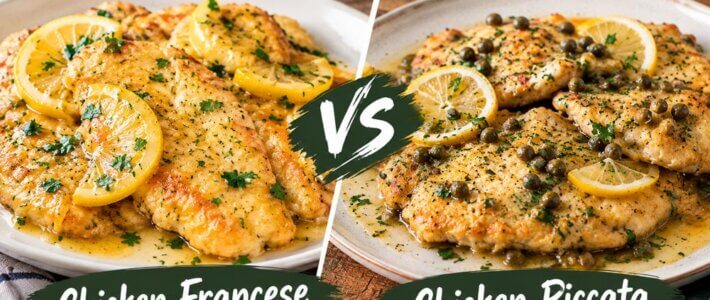
Parm dishes sit in a crowded neighbourhood on most Italian American menus, usually next to the lemon butter entrees and the baked pastas. If the parm is feeling heavy, the lighter options are worth a look, and we compared the two main ones in chicken francese versus piccata.

Veal parm shows up in a lot of places too, and it sits between the other two: more delicate than chicken, firmer than eggplant, usually the most expensive of the three. Shrimp parm exists as well, though it divides opinion sharply.

For a sit down dinner, either parm makes a solid order, and the fuller Italian menus around here cover both along with the pastas. Our look at what people want from an Italian restaurant gets into how those menus are put together, and either one works for a quiet evening out.

For a group, the tray is the move. Eggplant especially, since it was designed to be made in quantity. The catering side of most kitchens will do both by the half or full tray with a day of notice.

If you want to see what a Randolph kitchen puts on its entree list, the full menu lays it out, regulars give their honest takes in reviews on Yelp, and hours are on the contact page.

The eggplant got there first. The chicken got more famous. Both earned their spot.

Frequently Asked Questions

Which came first, chicken parmesan or eggplant parmesan?

Eggplant, by a long way. Melanzane alla parmigiana is a traditional Southern Italian dish built around eggplant because it grew cheaply in the region while meat was expensive. The chicken version developed in America, where meat cost far less.

Is eggplant parm healthier than chicken parm?

Not automatically. Eggplant has fewer calories than chicken on its own, but fried eggplant absorbs considerably more oil than a chicken cutlet does, and the layered version usually carries more cheese. Baked rather than fried versions change the picture more than the choice of base does.

Why is my eggplant parmesan bitter or watery?

Almost always because the eggplant was not salted before frying. Salting the slices for thirty to forty minutes draws out moisture and bitterness. Pat them dry before breading, and make sure the oil is properly hot so the slices fry rather than soak.

What does parmigiana actually mean?

It likely refers to the layering technique rather than to parmesan cheese, since most versions use mostly mozzarella. One theory links it to the Sicilian word for the overlapping slats of a shutter, which is what the layered eggplant resembles. The exact origin is still debated.

Which one is better for takeout?

Eggplant parm travels better, because it was already soft and layered so nothing is lost on the drive. Chicken parm loses its crisp breading in a closed container. Asking for the sauce on the side helps if you are getting the chicken.
Baked Ziti vs Lasagna: What Is the Actual Difference?

Baked ziti vs lasagna

Baked Ziti vs Lasagna: Which Tray Should You Actually Make?

Same pasta aisle. Same jar of sauce. Same block of mozzarella and tub of ricotta in the cart. Yet one of them takes twenty minutes to assemble and the other eats your whole Sunday afternoon. Baked ziti vs lasagna is a question about effort as much as it is about food, and most people only find that out the hard way, usually around the third layer, when the noodles start sliding.

So let us settle it. What actually separates them, which one feeds more people, and which one you should be ordering instead of making when the headcount gets serious.

The Difference in One Line

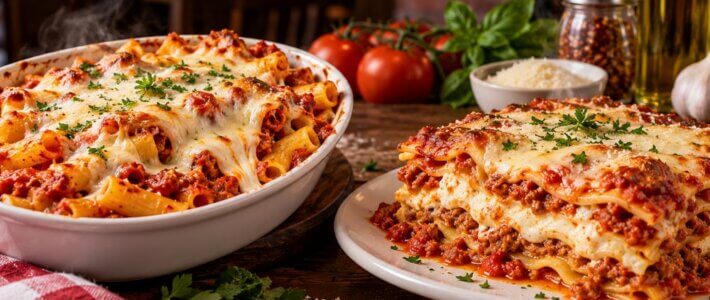
Lasagna is layered. Baked ziti is mixed.

That really is the heart of it. Lasagna uses wide flat sheets, and you build it in deliberate strata: sauce, noodles, ricotta, meat, cheese, repeat, four or five times. Every forkful cuts through the same architecture.

Baked ziti uses short tube pasta, and everything gets tossed together in a bowl before it goes in the dish. Sauce, cheese and pasta all at once. Then it bakes until the top browns. No layers, no architecture, no patience required.

Everything else, and there is plenty else, follows from that one choice.

Where Each One Came From

Lasagna is old and properly Italian. The layered baked pasta tradition runs back centuries, and the version most people picture, with ragù and besciamella, is the Bolognese one from Emilia-Romagna. No ricotta in that original, by the way. The ricotta heavy version is a Southern Italian and Italian American adaptation.

Baked ziti is mostly an Italian American dish. There are Italian ancestors, pasta al forno in various regional forms, but the specific thing most Americans mean by baked ziti, ziti tossed with marinara and ricotta and baked under mozzarella, took its recognisable shape in the United States. It was the practical version. Cheaper pasta, far less labour, and it fed a crowd on a weeknight.

That pattern repeats across a lot of Italian cooking that changed after emigration. The bones stay Italian, the details get rebuilt around what was available and how much time people actually had.

Baked Ziti vs Lasagna, Point by Point

FeatureBaked ZitiLasagna
PastaZiti, penne or rigatoniFlat lasagna sheets
AssemblyTossed together, then bakedLayered in order
Prep timeAbout 20 minutesAbout 60 to 90 minutes
RicottaMixed through or dollopedSpread in distinct layers
SauceMarinara or a quick meat sauceOften ragù, sometimes besciamella
TextureLoose, saucy, uneven in a good wayFirm, sliceable, structured
ServingSpoonedCut into squares
Holds its shape?No, and it does not try toYes, if you let it rest

The Part Nobody Warns You About: Resting

Here is the single biggest mistake people make with lasagna, and it has nothing to do with the recipe.

You have to let it sit. Twenty minutes minimum, closer to thirty if you can stand it. Straight out of the oven, the cheese and sauce are still molten and the layers have nothing holding them together. Cut it then and you get a delicious puddle. Let it rest and the starches set, the cheese firms, and you get a clean square that stands up on the plate.

Baked ziti does not care. It was never going to hold a shape, so nobody expects it to. Spoon it out whenever you want. That forgiveness is a real advantage when you are feeding people who arrive at unpredictable times.

Which leads to a small contradiction worth explaining. Lasagna is often called the better make ahead dish, and it is, because the flavours settle overnight and it reheats beautifully. But on the night itself it is the less flexible of the two. Both things are true. Lasagna is better planned and worse improvised.

Which Feeds More People?

Roughly the same tray size feeds roughly the same number, but they portion differently.

A standard half tray of either feeds about ten to twelve people as a main, or fifteen to eighteen as part of a bigger spread. Lasagna cuts into uniform squares, which makes portioning across a serving line simple and predictable. Baked ziti is spooned, which means portions drift, usually upward, as the evening goes on.

For a buffet, lasagna gives you more control. For a family table where people go back for seconds, ziti is friendlier. If you are also putting pies on the table, the same counting logic from our guide on how much pizza per person applies. Count heads, round up, and do not spread yourself across too many dishes.

One practical note. Both are heavy. If a baked pasta is on the table, drop your other portions by about a quarter. People fill up on it faster than they expect.

Freezing and Reheating, Since Both Make Too Much

Nobody makes a small tray of either. That is sort of the point, so it helps to know what survives the freezer.

Lasagna freezes beautifully, better than almost any other baked dish. Assemble it fully, stop before baking, wrap it tightly in foil and freeze it flat. It will keep three months. Bake from frozen at 375 for about ninety minutes with the foil on, then uncover for the last twenty. You can also freeze it after baking, in portions, which is handy for weekday lunches.

Baked ziti freezes well too, with one caveat. The pasta keeps absorbing sauce even in the freezer, so a ziti that went in perfectly sauced can come out a little dry. Add an extra ladle of sauce before you freeze it and it comes back right.

For reheating single portions of either, the oven beats the microwave by a mile. A covered dish at 350 for twenty minutes brings them back properly. The microwave heats unevenly and turns the edges rubbery while the middle is still cold, which is a sad end for something you spent an afternoon on.

Make It or Order It?

Honest answer: make the ziti, order the lasagna.

Baked ziti is genuinely easy. Boil pasta slightly under, toss with sauce and ricotta, top with mozzarella, bake forty minutes. There is very little that can go wrong, and homemade tastes just as good as a restaurant version because the dish is not asking for technique.

Lasagna is the opposite. It rewards practice and punishes rushing. Noodles that were not cooked right, sauce that was too thin, ricotta that was too wet, layers that were uneven. Each of those is a small failure on its own and they stack. A kitchen that makes it forty times a week will make a better one than you will on a Sunday, and they will deliver it in a tray you do not have to wash.

For bigger events this is not even close. Twelve people is a tray. Thirty people is a job. That is exactly the territory catering trays were built for, and it is worth a day of notice so a kitchen can plan the oven time.

A regular who hosts her extended family every Easter told us how she split it. “I used this as my system for years now. I make the ziti myself because it is easy and the kids like it, and I order the lasagna because mine always came out soupy and I got tired of apologising for it.” Our customers are really happy with the baked pasta trays, and the thing we hear most is that the lasagna slices cleanly even after the drive, which is the part people worry about.

Small Things That Make a Big Difference

Undercook the pasta. For either dish, pull it two or three minutes before the package says. It keeps cooking in the oven, soaking up sauce. Fully cooked pasta going in means mush coming out.

Drain the ricotta. Tub ricotta holds water. Sit it in a sieve for twenty minutes, or stir in a beaten egg, which binds it and stops it weeping into the sauce. This single step fixes most soupy lasagna.

Sauce the bottom first. A thin layer in the dish before anything else stops the first layer welding itself to the pan.

Cover, then uncover. Foil on for the first thirty minutes so it heats through without drying, off for the last fifteen so the top browns. Works for both.

And a tangent that matters more than it sounds: what you serve alongside. Something with crunch and acid cuts through all that cheese. A sharp green salad does it. So does good bread, and the garlic knots and garlic bread question is worth a minute of thought there, since knots travel better and bread holds up to sauce better.

Variations Worth Knowing

Neither dish is fixed. A few versions turn up regularly on North Jersey menus.

  • Vodka ziti swaps marinara for the pink cream sauce. Richer, slightly sweeter, very popular.
  • White lasagna skips the tomato entirely for besciamella, often with spinach or mushrooms.
  • Ziti with sausage and broccoli rabe is the bitter, garlicky version that converts people who think baked pasta is bland.
  • Gluten free versions work better for ziti than lasagna, because short gluten free pasta holds together far better than gluten free sheets do. Our page on gluten free pasta covers what to ask about.

If you are building a full Italian spread rather than a single dish, baked pasta usually sits alongside a chicken entree. The lemon butter options are a good contrast to all that tomato and cheese, and we pulled those apart in chicken francese versus piccata.

Finding Good Versions Around Morris County

Baked pasta is one of those dishes where the neighbourhood places tend to beat the bigger ones, because it is made in quantity and eaten constantly, so the recipe gets refined by repetition rather than by ambition.

Around Randolph, Denville and the towns along Route 10, most Italian kitchens carry both, often by the tray as well as by the plate. If you are looking around Denville in particular, our local guide to Italian food near Denville covers what tends to be worth ordering. Regulars share their own picks in reviews on Yelp, and the full menu and contact details are there if you want to call ahead.

Layers or no layers. Either way, make enough for leftovers. Both are better the next day.

Frequently Asked Questions

What is the difference between baked ziti and lasagna?

Lasagna is built in layers using flat pasta sheets, with sauce, cheese and filling stacked in order. Baked ziti uses short tube pasta tossed together with sauce and cheese before baking. Lasagna cuts into firm squares. Baked ziti is spooned and stays loose.

Which is easier to make, baked ziti or lasagna?

Baked ziti, by a wide margin. It takes about twenty minutes to assemble against an hour or more for lasagna, and there is no layering to get wrong. Lasagna also has to rest for twenty to thirty minutes after baking before it can be cut cleanly.

Can you use penne instead of ziti?

Yes. Penne, rigatoni and mostaccioli all work. Ziti is smooth and slightly longer, penne is ridged and cut on an angle. The ridges actually hold sauce a little better, so penne is a fine swap and some people prefer it.

Why does my lasagna come out watery?

Usually the ricotta or the sauce. Tub ricotta holds a lot of water, so drain it in a sieve or bind it with a beaten egg. Thin sauce and fully cooked noodles add to it. Letting the finished dish rest before cutting also lets the starches set.

Which one is better for feeding a large group?

Lasagna portions more predictably because it cuts into uniform squares, which helps on a buffet line. Baked ziti is friendlier at a family table where people serve themselves. A half tray of either feeds roughly ten to twelve as a main course.

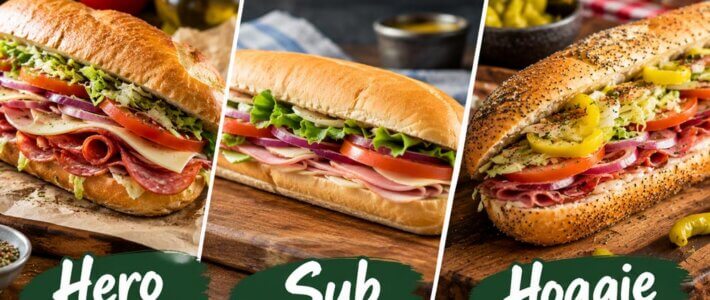
Hero vs Sub vs Hoagie: Is There Really Any Difference?

Hero vs Sub vs Hoagie: Is There Really Any Difference?

Hero vs Sub vs Hoagie: Is There Really Any Difference?

Walk into a deli in Newark and ask for a hoagie, and somebody behind the counter might squint at you. Say sub in South Philly and you will probably get corrected, politely or otherwise. Hero vs sub vs hoagie is one of those arguments that sounds like it should have a clean answer. It mostly does not. What it has instead is geography, a few good origin stories, and a lot of people who are very sure they are right.

Here is the short version before we get into the fun part. All three names describe the same basic thing: a long, split roll stuffed with meats, cheese and toppings. The bread is the same shape. The fillings overlap almost completely. What changes is where you are standing when you order it, and sometimes a few small habits about how it is built.

So why does anyone care? Because food words are never only about food. They are about where you grew up.

Same Sandwich, Three Passports

Think of it like soda versus pop versus coke. Same fizzy drink, different map. The long sandwich works the same way, and the dividing lines run straight through the Northeast.

  • Hero is the New York City word, and you will hear it across the boroughs, Long Island and parts of North Jersey.
  • Hoagie belongs to Philadelphia and the Delaware Valley, which means South Jersey says it with total confidence.
  • Sub is the national default. Chains spread it everywhere, so it is the word most Americans reach for when they are not thinking about it.
  • Grinder is the New England cousin, common in Connecticut, Rhode Island and Massachusetts, and it usually hints at a hot sandwich.

New Jersey sits right on the fault line, which is exactly why the argument gets so loud here. The state already splits itself in half over pork roll versus Taylor ham. Of course it would split over sandwiches too.

Where the Hoagie Got Its Name

The most repeated story points to Hog Island, a shipyard in Philadelphia that ran during World War One. Workers there supposedly ate huge Italian sandwiches for lunch, and the “hoggies” eaten on Hog Island slowly turned into hoagies. It is a good story. Food historians are not all convinced by it, and there are rival versions involving street vendors and a jazz musician turned sandwich seller.

What nobody disputes is how seriously Philadelphia takes it. The city named the hoagie its official sandwich back in 1992, which tells you something about civic priorities. And honestly? Fair enough.

A classic Philly hoagie leans Italian: a seeded or soft roll, layers of salami, capicola and provolone, shredded lettuce, tomato, onion, oregano, and a drizzle of oil and vinegar. Mayo is a regional sore point. Some shops refuse outright. Others will put it on without asking.

The Hero and Its Very New York Story

The hero comes out of New York in the 1930s, and the name is usually credited to a food writer who described the sandwich as so big you had to be a hero to finish it. Whether that is the true origin or just the quote that stuck, it fits the sandwich perfectly.

New York heroes lean hard into the hot side of the menu. Chicken parm, meatball parm, sausage and peppers, eggplant parm. Anything that comes smothered in red sauce and melted mozzarella, pressed into a roll, and wrapped in paper that goes translucent in about ninety seconds. Cold cuts count too, but when a New Yorker says hero, there is a decent chance marinara is involved.

That hot sandwich tradition comes straight from Italian American kitchens, which borrowed the flavors of the old country and rebuilt them around cheap, plentiful bread. The broader story of how Italian cooking changed after crossing the Atlantic is full of dishes like this, ones that would baffle a cook in Rome but feel completely natural in Brooklyn.

So Why Is It Called a Sub?

Look at the shape. Long, rounded at the ends, a little bit bulky in the middle. It looks like a submarine, and that is the simplest explanation for the name.

One popular story puts the origin near the submarine base in Groton, Connecticut, during the Second World War, where a sandwich shop sold long rolls to Navy crews. Again, nobody can prove it beyond doubt. But it is plausible, and it explains why the word caught on so fast once sandwich franchises started opening across the country in the decades after the war.

Here is the funny part. Sub is technically the least regional word of the three, but that is exactly what makes some Northeasterners bristle at it. It sounds like a chain. It sounds like somewhere with a drive through. Say sub at an old neighborhood deli and you are not wrong, exactly. You just sound like you are visiting.

Wait, What About the Grinder?

You cannot have this conversation without somebody from Connecticut raising a hand. A grinder is the New England name, and the explanation depends on who you ask. Some say it came from dockworkers, who were nicknamed grinders. Others say the chewy bread took real effort to grind through with your teeth.

In a lot of places the word also signals heat. A grinder is often toasted or baked until the cheese melts and the bread crisps at the edges. So if a menu offers both subs and grinders, the grinder is usually the warm one. Small detail, but useful when you are staring at a board trying to decide.

And while we are on tangents, the po boy in New Orleans and the spuckie in parts of Boston belong to the same family tree. Every port city with Italian immigrants seems to have built its own long sandwich and given it its own name. Which says something rather lovely about how food travels.

Hero vs Sub vs Hoagie: The Actual Differences

Let me be fair to the people who insist there is a real difference. There are a few, they are just softer than the arguments suggest.

NameHome TurfUsual BreadLeans TowardTypical Tell
HeroNew York City, North JerseyItalian loaf, crusty outsideHot, sauced fillingsParm sandwiches, red sauce
HoagiePhiladelphia, South JerseySoft or seeded rollCold Italian meatsOil, vinegar, oregano
SubNationwideSoft long rollEitherChain menu vocabulary
GrinderNew EnglandCrusty, often toastedHot and meltedBaked until the cheese bubbles

So the real answer to hero vs sub vs hoagie comes down to three things: the roll, the temperature, and the zip code. Not the fillings. Italian cold cuts show up under every one of those names, and so does a meatball sandwich.

What Makes Any of Them Good

Names aside, a great long sandwich lives or dies on the bread. Get that wrong and nothing else can save it. The roll needs a crust sturdy enough to hold oil and tomato without collapsing, but a soft enough crumb that you are not wrestling it. Too hard and it shreds the roof of your mouth. Too soft and it turns to paste before you reach the halfway mark.

After bread comes layering, and this is where good shops quietly separate themselves. Meats go in folded, not flat, so there is air between them. Cheese sits next to the bread to act as a moisture barrier. Wet things like tomatoes and dressing go in the middle, away from the crust. It sounds fussy. It is the difference between a sandwich that holds up on a car ride and one that falls apart on your lap.

Then balance. A good Italian needs acid from the vinegar or peppers to cut through all that cured fat. A hot parm sandwich needs enough sauce to taste like something, but not so much that the bottom half dissolves. Honestly, most of it is restraint.

A regular who orders for his crew every Friday told us, “I used this as my way of settling the argument at work. Half the guys are from Philly and call everything a hoagie, the other half grew up in Bergen County. Now I just order a tray and call it lunch.” Our customers are really happy with the hot subs for group orders, and what we hear most is that they travel better than people expect.

Feeding a Crowd With Long Sandwiches

Here is where the long sandwich quietly beats pizza. It can be built ahead, cut into portions, and it stays good at room temperature for longer. For an office lunch, a youth sports team, or a garage full of people watching a game, a sandwich platter is easy to share and easy to portion.

A rough rule: a full length roll cut into four pieces feeds two adults as a meal, or four as part of a spread. Mix hot and cold options so nobody is stuck with a sandwich that went lukewarm in the corner. If you are planning a mixed order with pies, the same logic as our guide on how much pizza per person applies. Count heads, round up, and do not overdo the variety.

For bigger events it helps to call ahead. A kitchen can build twenty sandwiches properly if it knows they are coming, and it can build them badly if they arrive as a surprise. The catering options are set up for exactly that kind of planning, and a sandwich tray alongside a couple of pies makes for a crowd pleasing game day spread.

The Jersey Answer, For Whatever It Is Worth

If you live in Morris County, you probably grew up hearing sub more than anything else, with hero mixed in from the New York side of the family. Hoagie shows up once you drive south of Trenton. None of these are wrong. They are just local accents for the same lunch.

It is the same kind of friendly rivalry that shows up in the NJ pizza versus NY pizza debate, where tiny differences carry enormous hometown pride. And much like the calzone and stromboli confusion, the names get used loosely by customers and kitchens alike.

If you want to see what a Randolph kitchen puts in its hot and cold subs, the full menu lays it out, and regulars share their favorites in local reviews on Yelp. Hours and ordering details sit on the contact page.

Call it whatever you like when you order. The kitchen will know what you mean.

Frequently Asked Questions

Is a hoagie the same as a sub?

Essentially yes. Both are long split rolls filled with meats, cheese and toppings. Hoagie is the Philadelphia and South Jersey name and usually implies a cold Italian build with oil and vinegar. Sub is the national term and covers both hot and cold versions.

Why is it called a hero sandwich?

The name took hold in New York during the 1930s. The most repeated explanation is that the sandwich was so large you needed to be a hero to finish it. Nobody can prove that is the original source, but it is the story most people know.

What is a grinder sandwich?

A grinder is the New England name for a long sandwich, and it often means a hot one that is toasted or baked until the cheese melts. The name may come from dockworkers, who were nicknamed grinders, or from the chewing effort the crusty bread required.

What do people in New Jersey call it?

It depends which half of the state you are in. North Jersey mostly says sub, with hero common near New York. South Jersey, closer to Philadelphia, says hoagie. Central Jersey, true to form, uses all three.

What is on a classic Italian sub?

Usually salami, capicola, ham and provolone on a long Italian roll, with lettuce, tomato, onion, hot or sweet peppers, oregano, and a finish of oil and vinegar. Some shops add mortadella or prosciutto. Mayonnaise is optional and, in some places, controversial.

Chicken Francese vs Chicken Piccata: The Real Difference

Chicken Francese vs Chicken Piccata

Chicken Francese vs Chicken Piccata: What Actually Separates Them?

Both arrive golden. Both sit in a shiny lemon and butter sauce. Both come draped over a nest of pasta, and both cost about the same on most Italian American menus. So when you are looking at chicken francese vs chicken piccata, it is easy to assume they are two names for one dish. They are not, though the gap is smaller than you might expect. It comes down to one step at the prep station and one ingredient in the pan.

Once you know what those two things are, you will spot the difference from across the table. Let me explain.

The Thirty Second Answer

Francese is dredged in flour, then dipped in beaten egg, then pan fried. That egg coat puffs slightly and turns soft and golden, almost like a thin omelet wrapped around the chicken. The sauce is lemon, butter, white wine and stock.

Piccata is dredged in flour only, no egg, then sautéed. The crust is thinner and a little crisper. The sauce is also lemon, butter and white wine, but with capers stirred in, and usually a handful of chopped parsley.

Egg wash versus capers. That is the core of it. Everything else is detail, and the details are where things get interesting.

Where Francese Comes From

Francese means French in Italian, which is a little funny for a dish that is about as Italian American as it gets. The name most likely refers to the egg batter technique, which older Italian cooks associated with French cooking. It is not a traditional dish from any particular region of Italy. It grew up in American kitchens, mostly in the Northeast, after the Second World War.

Rochester, New York, has a particularly strong claim to it. Restaurants there have been serving Chicken French for decades, and locals will tell you, with feeling, that nobody else does it right. You will also see it spelled Francaise on a lot of New Jersey menus. Same dish, different spelling, and nobody at the counter will blink either way.

Before chicken got popular, the original version was often made with veal. Veal francese still shows up on plenty of menus, and so does shrimp or fillet of sole. The technique works on anything thin and delicate.

Where Piccata Comes From

Piccata has a clearer Italian lineage. Thin veal cutlets cooked with lemon, often called scaloppine al limone, are a genuine Italian preparation. The word piccata is usually explained as meaning something like sharp or piquant, which suits a sauce built on lemon and briny capers.

When the dish crossed to America, chicken slowly replaced veal because it was cheaper and more widely available. Capers became the signature, even though plenty of Italian versions skip them. That is the pattern with a lot of Italian cooking that changed after emigration: the bones of the dish stay Italian, and the details get rebuilt around what American markets had on the shelf.

Chicken Francese vs Chicken Piccata, Side by Side

FeatureFrancesePiccata
CoatingFlour, then eggFlour only
TextureSoft, puffy, goldenThin, lightly crisp
Sauce baseLemon, butter, white wine, stockLemon, butter, white wine
Signature ingredientThe egg batterCapers
FlavorMellow, rich, butterySharp, briny, bright
OriginItalian American, postwar NortheastItalian roots, Americanized
Often served withAngel hair or linguineLinguine, spinach or roasted potatoes

What They Taste Like, Honestly

Francese is the gentler of the two. The egg coat soaks up the sauce like a sponge, so every bite tastes of butter and lemon without either one shouting. It is comfort food. If you grew up on it, it probably tastes like somebody’s Sunday dinner.

Piccata is louder. The capers bring salt and a slight vinegary snap, and without the egg to soften things, the lemon comes through sharper. It feels lighter even though it has nearly the same amount of butter. Here is the small contradiction worth noticing: piccata tastes lighter and brighter, yet francese often feels less heavy in the stomach, because the egg coat absorbs sauce instead of letting it pool on the plate. Both are true. It just depends what you mean by light.

If you love bold, salty, acidic flavors, the kind of person who orders extra lemon wedges, you will lean piccata. If you want something soft and familiar at the end of a long week, francese wins.

Which One Should You Order?

A few quick rules of thumb, since this is the question most people actually have.

  • Not a caper fan? Francese, every time. Capers are divisive and piccata does not work without them.
  • Feeding kids? Francese. The mild egg coat and soft texture go down easier with younger eaters.
  • Want something that pairs with a crisp white wine? Piccata. The acidity matches beautifully.
  • Ordering for a group? Francese holds up better on a catering tray, since the egg coat stays moist while it waits.

That last point matters more than it sounds. Piccata is at its best straight from the pan, when the crust still has a little snap. After twenty minutes in a covered tray it softens. Francese barely changes, which is why it shows up so often at family parties and catered events.

One customer who orders for her family every other Sunday put it like this: “I used this as my compromise dish for years. My husband wants something with a little bite and my mother wants something gentle, so I order the francese for the table and a side of lemon for him. Nobody complains.” Our customers are really happy with our Chicken Francese, and the feedback we hear most is that it reheats better than they expect.

Making Either One at Home

Both dishes are weeknight friendly, maybe thirty minutes start to finish. A few kitchen tips separate a good plate from a soggy one.

Pound the chicken thin. Aim for about a quarter inch, evenly. A thick breast cooks unevenly, and by the time the center is done the outside is overdone. Put it between plastic wrap and use a heavy pan if you do not own a mallet.

For francese, flour first, then egg, then straight into the pan. Do not let the egg-coated cutlets sit around. The coating slides off. A spoonful of grated parmesan whisked into the egg adds depth, and plenty of Jersey cooks swear by it.

For piccata, shake off the excess flour. Too much and the sauce turns gluey. You want a whisper of coating, not a jacket.

Finish the sauce off the heat. Swirl in the cold butter after the pan comes off the burner. That is how you get a glossy, emulsified sauce instead of a greasy one. It is a small restaurant trick, and it makes a real difference.

One more thing on flour. Both dishes rely on a wheat dredge, so neither is naturally gluten free. Rice flour or a gluten free flour blend works as a swap at home, and the egg coat on francese actually hides the difference well. Pair it with gluten free pasta and you have a plate that works for the whole table.

What to Put Under It

Traditionally both sit on thin pasta, angel hair or linguine, which catches the sauce. Sautéed spinach with garlic is a common swap for a lighter plate. Roasted potatoes work too, especially with piccata, where the capers and potatoes play well together.

And while we are wandering, a quick word on the third cousin that often shares the menu: chicken marsala. It uses the same flour dredge as piccata, but the sauce swaps lemon for sweet marsala wine and mushrooms. Rich, earthy, and entirely different in mood. If francese and piccata are summer, marsala is November.

Beyond Chicken: Veal, Shrimp and Fish

Here is something people forget. Both of these are techniques first and chicken dishes second. Swap the protein and the method barely changes.

Veal is the old-school choice, and many Jersey menus still carry veal francese and veal piccata side by side. Veal cutlets are thinner and more tender than chicken, so they cook in about half the time. Shrimp francese is another favorite, with the egg batter clinging to each shrimp before a quick fry. Fillet of sole or flounder works beautifully with the francese method too, since the egg coat protects delicate fish from falling apart in the pan.

Piccata stretches just as easily. Swordfish piccata, salmon piccata, even thin slices of eggplant for a vegetarian plate. As long as the base is thin and cooks fast, the lemon and caper sauce will do the rest.

A Few Ordering Tips That Help

Ask how the sauce is made. Some kitchens thicken their lemon sauce with a little flour or cornstarch, which gives a creamier finish. Others keep it thin and glossy. Neither is wrong, but if you prefer one style, it is worth asking.

Ask for extra sauce if you are getting it with pasta. Angel hair drinks sauce fast, and a dry plate is a sad plate. Most kitchens will happily add a little more for no charge.

And if capers are the only thing stopping you from ordering piccata, just ask for them on the side. Plenty of cooks will do it, and you can add a few until it tastes right to you.

Finding Them Around Morris County

Both dishes live on nearly every Italian American menu in North Jersey, usually in the chicken entree section right next to the parm. For a slow dinner out, either one makes a solid date night pick. For a quicker weeknight, plenty of spots along Route 10 in Randolph will pack it up for takeout.

If you want to see how a local kitchen handles its chicken entrees, the full menu lists them alongside the pasta dishes, including a few crowd favorites like the vodka sauce plates. Regulars share honest takes in reviews on Yelp, and hours are on the contact page.

Egg or no egg. Capers or no capers. Once you know that, you will never mix the two up again.

Frequently Asked Questions

What is the main difference between francese and piccata?

The coating and the capers. Francese is dredged in flour and then dipped in egg before frying, which gives a soft golden batter. Piccata is dredged in flour only and its lemon butter sauce includes capers. Francese tastes mellow and buttery, while piccata tastes sharper and brinier.

What does francese mean?

Francese is the Italian word for French. The name most likely refers to the egg batter technique, which Italian cooks associated with French cooking. The dish itself is Italian American rather than traditionally Italian.

Is chicken francaise the same as chicken francese?

Yes. Francaise is simply the French spelling, and you will see both on menus across New Jersey and New York. The dish, the egg batter and the lemon butter sauce are the same.

Is chicken piccata the same as chicken marsala?

No. Both start with flour dredged cutlets, but piccata uses a lemon, butter and caper sauce, while marsala uses sweet marsala wine and mushrooms. Piccata is bright and tangy. Marsala is rich and earthy.

Which is healthier, francese or piccata?

They are close. Piccata skips the egg batter, so it carries slightly fewer calories from the coating, but both sauces rely on butter. Asking for the sauce on the side and swapping pasta for spinach makes a bigger difference than choosing one dish over the other.

Garlic Knots vs Garlic Bread: What Is the Difference?

Garlic Knots vs Garlic Bread

Garlic Knots vs Garlic Bread: Which One Belongs Next to Your Pie?

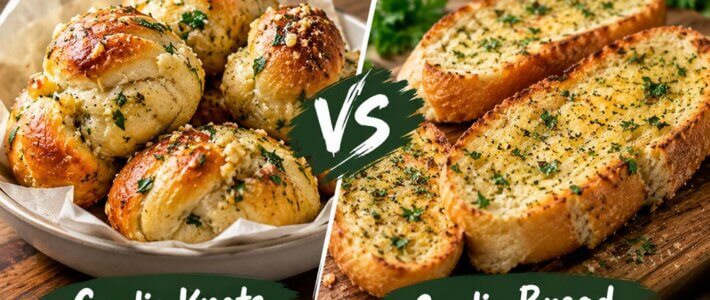
You order a large pie and the person on the phone asks, “Anything else?” And there it is, the small decision that somehow feels bigger than it should. Garlic knots vs garlic bread. Both are warm, both smell incredible, both vanish before the pizza box is fully open. But they are made in different ways, from different starting points, and they do slightly different jobs on the table.

So let us sort it out. Quick answer first, then the stuff that actually helps you choose.

The Short Answer

Garlic knots are made from pizza dough. Strips of raw dough get tied into loose knots, baked until puffy, then tossed while hot in garlic, butter or olive oil, parsley and grated cheese. Soft and chewy inside, glossy outside.

Garlic bread starts with a loaf that is already baked. Usually an Italian or French loaf, split or sliced, spread with garlic butter, then toasted or broiled. Crisp edges, soft middle, sometimes blanketed in melted mozzarella.

Raw dough versus finished bread. That single difference explains almost everything else about taste, texture and how well each one travels.

How Garlic Knots Came to Be

Garlic knots are a pizzeria invention, and a thrifty one. Most stories trace them to New York area pizzerias sometime in the middle of the twentieth century, where cooks were left with scraps of dough at the end of a shift. Throwing it away felt wasteful. Tying it into little knots, baking it, and drowning it in garlic butter felt a lot better.

Nobody has a birth certificate for the first knot. What we know is that they spread fast through the Northeast, especially in New York and New Jersey, and became the default side order at countless slice shops. They are a very regional thing, too. Travel far enough west and plenty of pizzerias have never heard of them.

Because they come from pizza dough, knots taste like the crust of a good pie. That is the whole appeal. If you are the person who eats the crust edge first, knots are basically a basket of your favorite part. And if you want a sense of how many ways that same dough can be shaped, our look at different pizza styles shows just how much a kitchen can do with one batch.

Where Garlic Bread Fits In

Garlic bread has older roots. Italians have been rubbing garlic on toasted bread and drizzling it with olive oil for centuries, a tradition you will know as bruschetta, or fettunta in Tuscany. That is the ancestor.

The version most Americans picture, a buttery, bright orange-flecked loaf wrapped in foil, is an Italian American creation that took off in the 1950s. Butter replaced olive oil because it was cheaper and familiar. Garlic powder sometimes replaced fresh garlic because it was convenient. Some purists wince at that. Most people just keep eating.

Here is the funny twist. Garlic bread is the version with the longer history, yet garlic knots feel more old-school when you walk into a Jersey pizzeria. Tradition is funny that way. It is less about age and more about what your grandmother ordered.

Garlic Knots vs Garlic Bread, Side by Side

FeatureGarlic KnotsGarlic Bread
Starting pointRaw pizza doughAn already baked loaf
ShapeSmall tied knotsSlices or split halves
TextureSoft, chewy, pillowyCrisp edges, soft center
Garlic appliedTossed on after bakingSpread on before toasting
Usual fatOlive oil, butter, or bothMostly butter
CheeseGrated parmesan on topOften melted mozzarella
Travels well?Yes, stays softLoses crunch in a closed box
Best withPizza and marinaraPasta and red sauce dishes

Texture Is the Real Deciding Factor

Taste-wise, they overlap more than you might think. Both are garlic, fat, salt and bread. The real split is how they feel when you bite in.

Knots are chewy. The dough was never baked before, so the crumb stays elastic and a little bouncy, like the rim of a New York slice. The garlic butter soaks into every fold of the knot, which means you get flavor in the nooks, not just on top.

Garlic bread is about contrast. The broiler crisps the cut edges while the inside stays soft. Add mozzarella and you get a molten, golden layer on top that stretches when you pull a slice away. It is richer, heavier, and more of a dish in its own right.

Think of it this way. Knots are a sidekick. Garlic bread wants a supporting role but secretly thinks it deserves top billing.

Which One Should You Order?

  • Getting pizza? Knots. They are made from the same dough, so they match the meal, and they are perfect for dragging through marinara between slices.
  • Getting pasta? Garlic bread. It is built for mopping up red sauce or vodka sauce at the bottom of the bowl.
  • Delivery with a long drive? Knots. Garlic bread steams inside a closed container and loses its crunch. Knots were never crunchy to begin with, so they arrive the way they left.
  • Feeding kids? Knots again. Easy to grab, no knife needed, and they come in portion-sized pieces.

Honestly, a lot of pizzerias will tell you knots are the single most common thing added to a plain cheese pie order. There is a reason. Pizza and knots are a matched set.

A mom who orders for her son’s travel soccer team told us, “I used this as my secret weapon for team dinners. I order the pies, then double the garlic knots, because the kids go through those before anybody touches a slice.” Our customers are really happy with our garlic knots, and the thing we hear most is that they are the first thing gone at every party.

What Makes a Great Garlic Knot

The dough has to be proofed properly. Underproofed dough bakes up dense and tight. A good knot has an open, airy crumb inside, the same way a good pizza rim does.

The garlic should be fresh and cooked just enough. Raw minced garlic is harsh and bitter. Garlic gently warmed in butter or oil turns sweet and mellow. The best shops warm the garlic in the fat first, then toss the knots in that mixture straight out of the oven.

The toss happens while the knots are hot. Hot bread drinks in the garlic butter. Cold bread just gets greasy on the surface. Timing matters more than the recipe.

The finish is simple. Chopped parsley, a snowfall of grated parmesan or pecorino, maybe a pinch of salt. Some places add red pepper flakes or oregano. Too many extras and it stops tasting like a knot.

And please, the marinara on the side should be good. A great knot dragged through watery sauce is a small tragedy.

How Many to Order for a Group

Garlic bread goes further per order since a single loaf cuts into eight or ten pieces. One loaf covers four to six people as a side. If you are already planning pies, our guide to how much pizza per person helps you size the whole order so nobody goes hungry and you are not eating leftovers until Wednesday.

For bigger gatherings, trays of knots are a simple win. They hold heat well, need no cutting, and disappear quietly. Pair them with a couple of pies for a game day spread, or ask about catering trays when the headcount gets serious.

Reheating Without Ruining Them

Here is where many people go wrong. The microwave is the enemy of both.

For knots: wrap them loosely in foil and warm them in a 350 degree oven for about six to eight minutes. The foil keeps the steam in so they soften again. If you want a little extra flavor, brush them with a bit of melted butter and a pinch of garlic powder before they go in.

For garlic bread: leave it uncovered and put it straight on the oven rack at 375 for five minutes, then a minute under the broiler. You want the edges crisp again, and foil works against you here.

An air fryer works for both if you keep the time short. Two to three minutes, no more. Longer than that and knots turn into croutons.

A Quick Word on Dietary Needs

Both sides are wheat based, so neither is gluten free by default. Some kitchens do offer gluten free crust or rolls, and a few make a gluten free garlic bread using that dough. If you are ordering for someone with celiac disease, ask about shared prep surfaces and fryers, not only the ingredients. Our page on gluten free pizza covers the questions worth asking.

Also, garlic knots made with butter are vegetarian but not vegan. Versions tossed only in olive oil can be vegan, provided the dough itself contains no dairy. It is always worth checking.

The Bigger Family of Pizza Shop Sides

Knots belong to a whole family of dough-based sides that grew up alongside pizza. Garlic rolls, which are knots baked in a round cluster. Breadsticks, which are longer and usually drier. Zeppole, which are fried dough dusted in sugar for dessert. And rolled items that step up into full meals, which is where the calzone and stromboli conversation comes in.

If you are curious how pizza itself grew from flatbread into the round pie we know, the history of pizza is a good read, and the structured record for pizza shows how its many regional variations connect.

Want to see what a Randolph pizzeria actually offers on the side? The full menu lists the knots, the bread and everything else, and the contact page has hours and ordering details.

Knots or bread. Pizza or pasta. Honestly, nobody has ever regretted ordering both.

Frequently Asked Questions

Are garlic knots made from pizza dough?

Yes. Garlic knots are made from the same raw dough used for pizza. It is cut into strips, tied into knots, baked, and then tossed while hot in garlic, butter or olive oil, parsley and grated cheese.

What is the difference between garlic knots and breadsticks?

Shape and seasoning. Knots are tied into small rounds and coated in garlic butter after baking, which keeps them soft and glossy. Breadsticks are long and straight, usually brushed lightly or seasoned before baking, and tend to be drier.

How do you reheat garlic knots?

Wrap them loosely in foil and warm them in a 350 degree oven for six to eight minutes. The foil traps steam so they soften again. Avoid the microwave, which makes them tough once they cool.

Is garlic bread Italian?

Its roots are. Italians have long rubbed garlic on toasted bread with olive oil, a dish known as bruschetta. The buttery, foil wrapped garlic bread most Americans know is an Italian American version that became popular in the 1950s.

Which goes better with pizza, garlic knots or garlic bread?

Garlic knots usually win with pizza because they are made from the same dough and travel well in a delivery box. Garlic bread pairs better with pasta and saucy entrees, where its crisp edges can soak up the sauce.