
Chicken Parm vs Eggplant Parm: Which Should You Order?
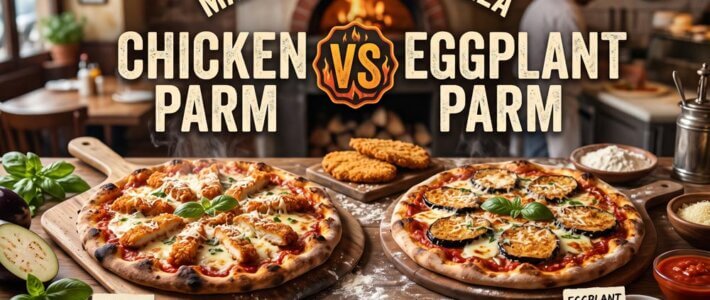
Chicken Parm vs Eggplant Parm: Which One Should You Order?
Two lines on the same menu, usually a dollar or two apart. Same red sauce, same blanket of melted mozzarella, same bed of pasta underneath. Chicken parm vs eggplant parm is the kind of decision people make in about four seconds, almost always on instinct, and almost always the same way every single time.
Here is the thing that surprises most people though. The eggplant came first. By a long way. Chicken parm is the newer invention, and it only exists because of what happened when Italians moved to America.
That history actually explains a lot about how the two dishes taste. Let me explain.
The Eggplant Is the Original
Melanzane alla parmigiana is a genuine Southern Italian dish, strongly associated with Campania and Sicily. Sliced eggplant, fried, layered with tomato, basil and cheese, then baked. It has been made that way for a very long time.
Eggplant grows abundantly in hot Southern Italian climates, which is the practical reason it became the base. Meat was expensive. Vegetables were not. So the dish that became famous was built around what people actually had.
When Italian immigrants arrived in America in the late 1800s and early 1900s, the economics flipped. Meat was suddenly cheap and plentiful, in a way it had never been back home. So the technique got applied to chicken cutlets, and later veal, and the new version took off. It is one of the clearest examples of how Italian cooking changed after crossing the Atlantic: same method, different protein, driven entirely by what the market offered.
There is a small wrinkle in the name too. Despite the parmigiana, most versions lean on mozzarella with only a dusting of actual parmesan. The name probably refers to the layering technique rather than to the cheese, though food historians argue about this and probably always will.
How They Are Actually Built
The two dishes diverge more in the kitchen than the menu suggests.
Chicken parm starts with a breast pounded thin, dredged in flour, dipped in egg, coated in seasoned breadcrumbs, then fried. The cutlet goes in a dish, gets topped with sauce and mozzarella, and goes under heat just long enough to melt. It is assembled as single portions.
Eggplant parm is usually layered like a casserole. Rounds of eggplant are salted first to draw out moisture and bitterness, then breaded and fried, then stacked with sauce and cheese in a baking dish and baked properly, often for half an hour or more. It comes out as a tray you cut from, not a plate you build.
That difference, single portion versus layered tray, is the one that matters most for how they behave. More on that shortly.
Taste and Texture, Honestly Compared
Chicken parm is the firmer, more structured of the two. The cutlet holds its shape, the breading stays reasonably crisp at the edges if it was fried properly, and you get a clear contrast between the crunchy outside and the tender meat. It tastes savoury and straightforward.
Eggplant parm is softer and sweeter. Fried eggplant turns almost custardy in the middle, and baking it under sauce for half an hour takes it further in that direction. The flavour is deeper and slightly sweet, with a faint earthiness underneath. It is less about contrast and more about everything melting into one thing.
People who love it love exactly that. People who do not usually had a badly made one, which is worth saying plainly: eggplant parm is the easier dish to ruin. Skip the salting step and the result is bitter and watery. Fry it at the wrong temperature and the slices drink oil like a sponge. A great eggplant parm takes more care than a great chicken parm.
Chicken Parm vs Eggplant Parm at a Glance
| Feature | Chicken Parm | Eggplant Parm |
| Origin | Italian American, early 1900s | Southern Italy, much older |
| Base | Pounded chicken cutlet | Sliced, salted eggplant |
| Build | Single portion, assembled | Layered tray, baked |
| Cooking time | Quick, melt the cheese | 30 minutes or more in the oven |
| Texture | Firm, crisp edges | Soft, almost custardy |
| Flavour | Savoury, meaty | Sweeter, earthy |
| Vegetarian | No | Yes, if cheese is acceptable |
| Travels well? | Fair, breading softens | Better, it was already soft |
| Easy to ruin? | Not really | Yes, if the eggplant is not salted |
So Which One Should You Order?
- Want the crunch? Chicken, and ask for the sauce on the side if you are taking it home. That keeps the breading from going soft on the drive.
- Taking it home anyway? Eggplant holds up better. It was never crisp to begin with, so there is nothing to lose.
- Vegetarian at the table? Eggplant, obviously. It is one of the few genuinely satisfying vegetarian options on most Italian American menus.
- Feeding a crowd? Eggplant, because it is already built as a tray. Chicken parm by the tray means twenty cutlets fried individually, which is a lot more work and usually costs more.
- Never had eggplant parm? Order it somewhere that makes a lot of it. A place that sells two a week will not have the technique down.
And if you genuinely cannot choose, a lot of kitchens will do a half and half platter. It is not on most menus, but it is a common enough request that nobody blinks at it.
A customer who orders for her office once a month told us how she handles it. “I used this as my default now. I get the eggplant tray because half the office does not eat meat, and I add a few chicken cutlets on the side for the ones who complain. Nobody has complained in a while.” Our customers are really happy with the eggplant parm, and what we hear most is that people who thought they disliked eggplant changed their minds after trying it properly made.
What to Put Alongside It
Both dishes are rich, and what sits next to them matters more than people allow for.
The default is spaghetti or linguine with a little extra sauce, and there is nothing wrong with that. But it doubles down on the same flavours. A sharply dressed green salad with plenty of vinegar does more for the plate, because the acid cuts straight through the fried breading and the cheese. Sauteed broccoli rabe or spinach with garlic works the same way and feels less like a side dish nobody asked for.
Roasted potatoes are an underrated pairing with chicken parm specifically, especially if you are skipping pasta. And a glass of something with acidity, a Chianti or even a dry white, resets the palate between bites better than a heavy red does.
One more thing on portions. A parm platter is genuinely large at most Italian American places, often a full cutlet plus a mound of pasta. If you are ordering several dishes for a table, count on people eating less of each than they planned. Two platters and a shared side usually feeds three comfortably.
The Sandwich Question
Both of these also live a second life between bread, and the rules change slightly when they do.
A chicken parm hero is one of the great lunches, but it needs a sturdy roll. The sauce and the melted cheese will destroy soft bread within minutes. A crusty Italian loaf handles it. A soft sub roll turns to paste.
Eggplant parm on a roll is softer all the way through, which some people love and others find a bit one note. It also tends to be messier, because the layers slide. Worth asking for it pressed or toasted if that is an option.
Regional naming comes into play here too, since what you call that sandwich depends entirely on where you grew up. We pulled that apart in a piece on hero versus sub versus hoagie, and the short version is that a parm sandwich answers to all of them.
Making Either at Home
Both are weeknight doable, though the eggplant needs planning.
For eggplant, salt it first. Slice about a quarter inch thick, lay the rounds on a rack, salt both sides, and leave them for thirty to forty minutes. Water will bead on the surface. Pat it dry. This single step is the difference between good and bitter, and it is the one people skip.
For chicken, pound it even. A quarter inch, all the way across. Thick spots mean the outside overcooks while the middle is still catching up.
Do not drown either one. Sauce goes on top, not all around. Too much and the breading you worked for turns into wallpaper paste.
Bake the cheese briefly and hot. Just long enough to melt and blister. Twenty minutes under cheese undoes everything.
A quick tangent that is worth it: the sauce matters more here than in almost any other Italian American dish, because there is so little else going on. A thin watery sauce has nowhere to hide. If you are using a jar, simmer it for twenty minutes with a little garlic and olive oil first. It makes a noticeable difference.
What Else Is on That Part of the Menu
Parm dishes sit in a crowded neighbourhood on most Italian American menus, usually next to the lemon butter entrees and the baked pastas. If the parm is feeling heavy, the lighter options are worth a look, and we compared the two main ones in chicken francese versus piccata.
Veal parm shows up in a lot of places too, and it sits between the other two: more delicate than chicken, firmer than eggplant, usually the most expensive of the three. Shrimp parm exists as well, though it divides opinion sharply.
For a sit down dinner, either parm makes a solid order, and the fuller Italian menus around here cover both along with the pastas. Our look at what people want from an Italian restaurant gets into how those menus are put together, and either one works for a quiet evening out.
For a group, the tray is the move. Eggplant especially, since it was designed to be made in quantity. The catering side of most kitchens will do both by the half or full tray with a day of notice.
If you want to see what a Randolph kitchen puts on its entree list, the full menu lays it out, regulars give their honest takes in reviews on Yelp, and hours are on the contact page.
The eggplant got there first. The chicken got more famous. Both earned their spot.
Frequently Asked Questions
Which came first, chicken parmesan or eggplant parmesan?
Eggplant, by a long way. Melanzane alla parmigiana is a traditional Southern Italian dish built around eggplant because it grew cheaply in the region while meat was expensive. The chicken version developed in America, where meat cost far less.
Is eggplant parm healthier than chicken parm?
Not automatically. Eggplant has fewer calories than chicken on its own, but fried eggplant absorbs considerably more oil than a chicken cutlet does, and the layered version usually carries more cheese. Baked rather than fried versions change the picture more than the choice of base does.
Why is my eggplant parmesan bitter or watery?
Almost always because the eggplant was not salted before frying. Salting the slices for thirty to forty minutes draws out moisture and bitterness. Pat them dry before breading, and make sure the oil is properly hot so the slices fry rather than soak.
What does parmigiana actually mean?
It likely refers to the layering technique rather than to parmesan cheese, since most versions use mostly mozzarella. One theory links it to the Sicilian word for the overlapping slats of a shutter, which is what the layered eggplant resembles. The exact origin is still debated.
Which one is better for takeout?
Eggplant parm travels better, because it was already soft and layered so nothing is lost on the drive. Chicken parm loses its crisp breading in a closed container. Asking for the sauce on the side helps if you are getting the chicken.