marios famous pizza

Chicken Parm vs Eggplant Parm: Which Should You Order?
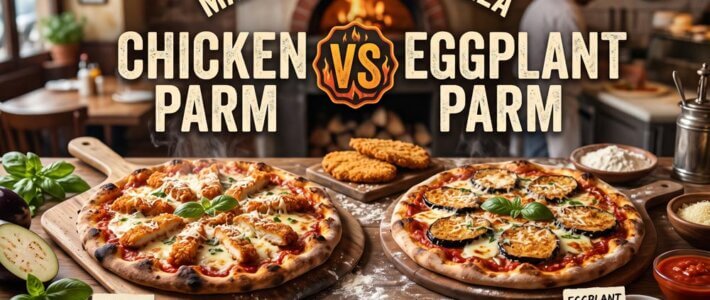
Chicken Parm vs Eggplant Parm

Chicken Parm vs Eggplant Parm: Which One Should You Order?

Two lines on the same menu, usually a dollar or two apart. Same red sauce, same blanket of melted mozzarella, same bed of pasta underneath. Chicken parm vs eggplant parm is the kind of decision people make in about four seconds, almost always on instinct, and almost always the same way every single time.

Here is the thing that surprises most people though. The eggplant came first. By a long way. Chicken parm is the newer invention, and it only exists because of what happened when Italians moved to America.

That history actually explains a lot about how the two dishes taste. Let me explain.

The Eggplant Is the Original

Melanzane alla parmigiana is a genuine Southern Italian dish, strongly associated with Campania and Sicily. Sliced eggplant, fried, layered with tomato, basil and cheese, then baked. It has been made that way for a very long time.

Eggplant grows abundantly in hot Southern Italian climates, which is the practical reason it became the base. Meat was expensive. Vegetables were not. So the dish that became famous was built around what people actually had.

When Italian immigrants arrived in America in the late 1800s and early 1900s, the economics flipped. Meat was suddenly cheap and plentiful, in a way it had never been back home. So the technique got applied to chicken cutlets, and later veal, and the new version took off. It is one of the clearest examples of how Italian cooking changed after crossing the Atlantic: same method, different protein, driven entirely by what the market offered.

There is a small wrinkle in the name too. Despite the parmigiana, most versions lean on mozzarella with only a dusting of actual parmesan. The name probably refers to the layering technique rather than to the cheese, though food historians argue about this and probably always will.

How They Are Actually Built

The two dishes diverge more in the kitchen than the menu suggests.

Chicken parm starts with a breast pounded thin, dredged in flour, dipped in egg, coated in seasoned breadcrumbs, then fried. The cutlet goes in a dish, gets topped with sauce and mozzarella, and goes under heat just long enough to melt. It is assembled as single portions.

Eggplant parm is usually layered like a casserole. Rounds of eggplant are salted first to draw out moisture and bitterness, then breaded and fried, then stacked with sauce and cheese in a baking dish and baked properly, often for half an hour or more. It comes out as a tray you cut from, not a plate you build.

That difference, single portion versus layered tray, is the one that matters most for how they behave. More on that shortly.

Taste and Texture, Honestly Compared

Chicken parm is the firmer, more structured of the two. The cutlet holds its shape, the breading stays reasonably crisp at the edges if it was fried properly, and you get a clear contrast between the crunchy outside and the tender meat. It tastes savoury and straightforward.

Eggplant parm is softer and sweeter. Fried eggplant turns almost custardy in the middle, and baking it under sauce for half an hour takes it further in that direction. The flavour is deeper and slightly sweet, with a faint earthiness underneath. It is less about contrast and more about everything melting into one thing.

People who love it love exactly that. People who do not usually had a badly made one, which is worth saying plainly: eggplant parm is the easier dish to ruin. Skip the salting step and the result is bitter and watery. Fry it at the wrong temperature and the slices drink oil like a sponge. A great eggplant parm takes more care than a great chicken parm.

Chicken Parm vs Eggplant Parm at a Glance

FeatureChicken ParmEggplant Parm
OriginItalian American, early 1900sSouthern Italy, much older
BasePounded chicken cutletSliced, salted eggplant
BuildSingle portion, assembledLayered tray, baked
Cooking timeQuick, melt the cheese30 minutes or more in the oven
TextureFirm, crisp edgesSoft, almost custardy
FlavourSavoury, meatySweeter, earthy
VegetarianNoYes, if cheese is acceptable
Travels well?Fair, breading softensBetter, it was already soft
Easy to ruin?Not reallyYes, if the eggplant is not salted

So Which One Should You Order?

  • Want the crunch? Chicken, and ask for the sauce on the side if you are taking it home. That keeps the breading from going soft on the drive.
  • Taking it home anyway? Eggplant holds up better. It was never crisp to begin with, so there is nothing to lose.
  • Vegetarian at the table? Eggplant, obviously. It is one of the few genuinely satisfying vegetarian options on most Italian American menus.
  • Feeding a crowd? Eggplant, because it is already built as a tray. Chicken parm by the tray means twenty cutlets fried individually, which is a lot more work and usually costs more.
  • Never had eggplant parm? Order it somewhere that makes a lot of it. A place that sells two a week will not have the technique down.

And if you genuinely cannot choose, a lot of kitchens will do a half and half platter. It is not on most menus, but it is a common enough request that nobody blinks at it.

A customer who orders for her office once a month told us how she handles it. “I used this as my default now. I get the eggplant tray because half the office does not eat meat, and I add a few chicken cutlets on the side for the ones who complain. Nobody has complained in a while.” Our customers are really happy with the eggplant parm, and what we hear most is that people who thought they disliked eggplant changed their minds after trying it properly made.

What to Put Alongside It

Both dishes are rich, and what sits next to them matters more than people allow for.

The default is spaghetti or linguine with a little extra sauce, and there is nothing wrong with that. But it doubles down on the same flavours. A sharply dressed green salad with plenty of vinegar does more for the plate, because the acid cuts straight through the fried breading and the cheese. Sauteed broccoli rabe or spinach with garlic works the same way and feels less like a side dish nobody asked for.

Roasted potatoes are an underrated pairing with chicken parm specifically, especially if you are skipping pasta. And a glass of something with acidity, a Chianti or even a dry white, resets the palate between bites better than a heavy red does.

One more thing on portions. A parm platter is genuinely large at most Italian American places, often a full cutlet plus a mound of pasta. If you are ordering several dishes for a table, count on people eating less of each than they planned. Two platters and a shared side usually feeds three comfortably.

The Sandwich Question

Both of these also live a second life between bread, and the rules change slightly when they do.

A chicken parm hero is one of the great lunches, but it needs a sturdy roll. The sauce and the melted cheese will destroy soft bread within minutes. A crusty Italian loaf handles it. A soft sub roll turns to paste.

Eggplant parm on a roll is softer all the way through, which some people love and others find a bit one note. It also tends to be messier, because the layers slide. Worth asking for it pressed or toasted if that is an option.

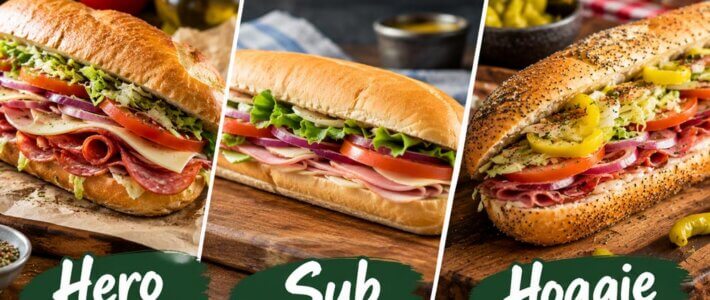
Regional naming comes into play here too, since what you call that sandwich depends entirely on where you grew up. We pulled that apart in a piece on hero versus sub versus hoagie, and the short version is that a parm sandwich answers to all of them.

Making Either at Home

Both are weeknight doable, though the eggplant needs planning.

For eggplant, salt it first. Slice about a quarter inch thick, lay the rounds on a rack, salt both sides, and leave them for thirty to forty minutes. Water will bead on the surface. Pat it dry. This single step is the difference between good and bitter, and it is the one people skip.

For chicken, pound it even. A quarter inch, all the way across. Thick spots mean the outside overcooks while the middle is still catching up.

Do not drown either one. Sauce goes on top, not all around. Too much and the breading you worked for turns into wallpaper paste.

Bake the cheese briefly and hot. Just long enough to melt and blister. Twenty minutes under cheese undoes everything.

A quick tangent that is worth it: the sauce matters more here than in almost any other Italian American dish, because there is so little else going on. A thin watery sauce has nowhere to hide. If you are using a jar, simmer it for twenty minutes with a little garlic and olive oil first. It makes a noticeable difference.

What Else Is on That Part of the Menu

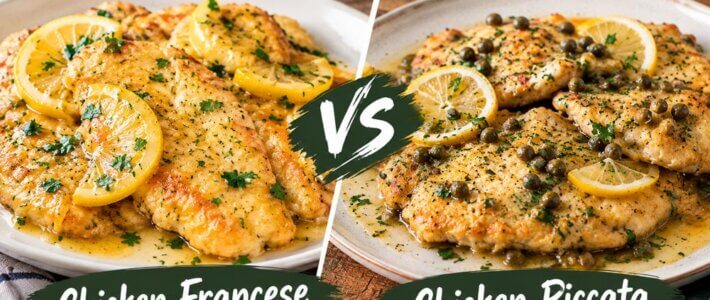
Parm dishes sit in a crowded neighbourhood on most Italian American menus, usually next to the lemon butter entrees and the baked pastas. If the parm is feeling heavy, the lighter options are worth a look, and we compared the two main ones in chicken francese versus piccata.

Veal parm shows up in a lot of places too, and it sits between the other two: more delicate than chicken, firmer than eggplant, usually the most expensive of the three. Shrimp parm exists as well, though it divides opinion sharply.

For a sit down dinner, either parm makes a solid order, and the fuller Italian menus around here cover both along with the pastas. Our look at what people want from an Italian restaurant gets into how those menus are put together, and either one works for a quiet evening out.

For a group, the tray is the move. Eggplant especially, since it was designed to be made in quantity. The catering side of most kitchens will do both by the half or full tray with a day of notice.

If you want to see what a Randolph kitchen puts on its entree list, the full menu lays it out, regulars give their honest takes in reviews on Yelp, and hours are on the contact page.

The eggplant got there first. The chicken got more famous. Both earned their spot.

Frequently Asked Questions

Which came first, chicken parmesan or eggplant parmesan?

Eggplant, by a long way. Melanzane alla parmigiana is a traditional Southern Italian dish built around eggplant because it grew cheaply in the region while meat was expensive. The chicken version developed in America, where meat cost far less.

Is eggplant parm healthier than chicken parm?

Not automatically. Eggplant has fewer calories than chicken on its own, but fried eggplant absorbs considerably more oil than a chicken cutlet does, and the layered version usually carries more cheese. Baked rather than fried versions change the picture more than the choice of base does.

Why is my eggplant parmesan bitter or watery?

Almost always because the eggplant was not salted before frying. Salting the slices for thirty to forty minutes draws out moisture and bitterness. Pat them dry before breading, and make sure the oil is properly hot so the slices fry rather than soak.

What does parmigiana actually mean?

It likely refers to the layering technique rather than to parmesan cheese, since most versions use mostly mozzarella. One theory links it to the Sicilian word for the overlapping slats of a shutter, which is what the layered eggplant resembles. The exact origin is still debated.

Which one is better for takeout?

Eggplant parm travels better, because it was already soft and layered so nothing is lost on the drive. Chicken parm loses its crisp breading in a closed container. Asking for the sauce on the side helps if you are getting the chicken.
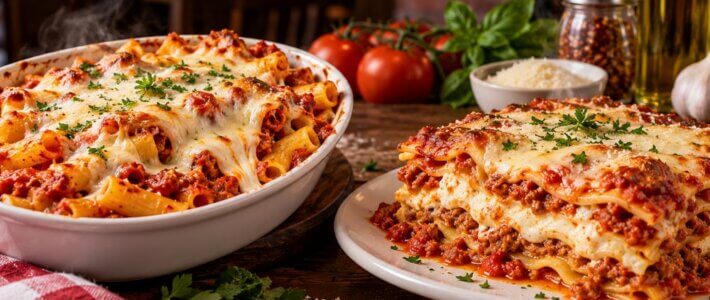
Baked Ziti vs Lasagna: What Is the Actual Difference?

Baked ziti vs lasagna

Baked Ziti vs Lasagna: Which Tray Should You Actually Make?

Same pasta aisle. Same jar of sauce. Same block of mozzarella and tub of ricotta in the cart. Yet one of them takes twenty minutes to assemble and the other eats your whole Sunday afternoon. Baked ziti vs lasagna is a question about effort as much as it is about food, and most people only find that out the hard way, usually around the third layer, when the noodles start sliding.

So let us settle it. What actually separates them, which one feeds more people, and which one you should be ordering instead of making when the headcount gets serious.

The Difference in One Line

Lasagna is layered. Baked ziti is mixed.

That really is the heart of it. Lasagna uses wide flat sheets, and you build it in deliberate strata: sauce, noodles, ricotta, meat, cheese, repeat, four or five times. Every forkful cuts through the same architecture.

Baked ziti uses short tube pasta, and everything gets tossed together in a bowl before it goes in the dish. Sauce, cheese and pasta all at once. Then it bakes until the top browns. No layers, no architecture, no patience required.

Everything else, and there is plenty else, follows from that one choice.

Where Each One Came From

Lasagna is old and properly Italian. The layered baked pasta tradition runs back centuries, and the version most people picture, with ragù and besciamella, is the Bolognese one from Emilia-Romagna. No ricotta in that original, by the way. The ricotta heavy version is a Southern Italian and Italian American adaptation.

Baked ziti is mostly an Italian American dish. There are Italian ancestors, pasta al forno in various regional forms, but the specific thing most Americans mean by baked ziti, ziti tossed with marinara and ricotta and baked under mozzarella, took its recognisable shape in the United States. It was the practical version. Cheaper pasta, far less labour, and it fed a crowd on a weeknight.

That pattern repeats across a lot of Italian cooking that changed after emigration. The bones stay Italian, the details get rebuilt around what was available and how much time people actually had.

Baked Ziti vs Lasagna, Point by Point

FeatureBaked ZitiLasagna
PastaZiti, penne or rigatoniFlat lasagna sheets
AssemblyTossed together, then bakedLayered in order
Prep timeAbout 20 minutesAbout 60 to 90 minutes
RicottaMixed through or dollopedSpread in distinct layers
SauceMarinara or a quick meat sauceOften ragù, sometimes besciamella
TextureLoose, saucy, uneven in a good wayFirm, sliceable, structured
ServingSpoonedCut into squares
Holds its shape?No, and it does not try toYes, if you let it rest

The Part Nobody Warns You About: Resting

Here is the single biggest mistake people make with lasagna, and it has nothing to do with the recipe.

You have to let it sit. Twenty minutes minimum, closer to thirty if you can stand it. Straight out of the oven, the cheese and sauce are still molten and the layers have nothing holding them together. Cut it then and you get a delicious puddle. Let it rest and the starches set, the cheese firms, and you get a clean square that stands up on the plate.

Baked ziti does not care. It was never going to hold a shape, so nobody expects it to. Spoon it out whenever you want. That forgiveness is a real advantage when you are feeding people who arrive at unpredictable times.

Which leads to a small contradiction worth explaining. Lasagna is often called the better make ahead dish, and it is, because the flavours settle overnight and it reheats beautifully. But on the night itself it is the less flexible of the two. Both things are true. Lasagna is better planned and worse improvised.

Which Feeds More People?

Roughly the same tray size feeds roughly the same number, but they portion differently.

A standard half tray of either feeds about ten to twelve people as a main, or fifteen to eighteen as part of a bigger spread. Lasagna cuts into uniform squares, which makes portioning across a serving line simple and predictable. Baked ziti is spooned, which means portions drift, usually upward, as the evening goes on.

For a buffet, lasagna gives you more control. For a family table where people go back for seconds, ziti is friendlier. If you are also putting pies on the table, the same counting logic from our guide on how much pizza per person applies. Count heads, round up, and do not spread yourself across too many dishes.

One practical note. Both are heavy. If a baked pasta is on the table, drop your other portions by about a quarter. People fill up on it faster than they expect.

Freezing and Reheating, Since Both Make Too Much

Nobody makes a small tray of either. That is sort of the point, so it helps to know what survives the freezer.

Lasagna freezes beautifully, better than almost any other baked dish. Assemble it fully, stop before baking, wrap it tightly in foil and freeze it flat. It will keep three months. Bake from frozen at 375 for about ninety minutes with the foil on, then uncover for the last twenty. You can also freeze it after baking, in portions, which is handy for weekday lunches.

Baked ziti freezes well too, with one caveat. The pasta keeps absorbing sauce even in the freezer, so a ziti that went in perfectly sauced can come out a little dry. Add an extra ladle of sauce before you freeze it and it comes back right.

For reheating single portions of either, the oven beats the microwave by a mile. A covered dish at 350 for twenty minutes brings them back properly. The microwave heats unevenly and turns the edges rubbery while the middle is still cold, which is a sad end for something you spent an afternoon on.

Make It or Order It?

Honest answer: make the ziti, order the lasagna.

Baked ziti is genuinely easy. Boil pasta slightly under, toss with sauce and ricotta, top with mozzarella, bake forty minutes. There is very little that can go wrong, and homemade tastes just as good as a restaurant version because the dish is not asking for technique.

Lasagna is the opposite. It rewards practice and punishes rushing. Noodles that were not cooked right, sauce that was too thin, ricotta that was too wet, layers that were uneven. Each of those is a small failure on its own and they stack. A kitchen that makes it forty times a week will make a better one than you will on a Sunday, and they will deliver it in a tray you do not have to wash.

For bigger events this is not even close. Twelve people is a tray. Thirty people is a job. That is exactly the territory catering trays were built for, and it is worth a day of notice so a kitchen can plan the oven time.

A regular who hosts her extended family every Easter told us how she split it. “I used this as my system for years now. I make the ziti myself because it is easy and the kids like it, and I order the lasagna because mine always came out soupy and I got tired of apologising for it.” Our customers are really happy with the baked pasta trays, and the thing we hear most is that the lasagna slices cleanly even after the drive, which is the part people worry about.

Small Things That Make a Big Difference

Undercook the pasta. For either dish, pull it two or three minutes before the package says. It keeps cooking in the oven, soaking up sauce. Fully cooked pasta going in means mush coming out.

Drain the ricotta. Tub ricotta holds water. Sit it in a sieve for twenty minutes, or stir in a beaten egg, which binds it and stops it weeping into the sauce. This single step fixes most soupy lasagna.

Sauce the bottom first. A thin layer in the dish before anything else stops the first layer welding itself to the pan.

Cover, then uncover. Foil on for the first thirty minutes so it heats through without drying, off for the last fifteen so the top browns. Works for both.

And a tangent that matters more than it sounds: what you serve alongside. Something with crunch and acid cuts through all that cheese. A sharp green salad does it. So does good bread, and the garlic knots and garlic bread question is worth a minute of thought there, since knots travel better and bread holds up to sauce better.

Variations Worth Knowing

Neither dish is fixed. A few versions turn up regularly on North Jersey menus.

  • Vodka ziti swaps marinara for the pink cream sauce. Richer, slightly sweeter, very popular.
  • White lasagna skips the tomato entirely for besciamella, often with spinach or mushrooms.
  • Ziti with sausage and broccoli rabe is the bitter, garlicky version that converts people who think baked pasta is bland.
  • Gluten free versions work better for ziti than lasagna, because short gluten free pasta holds together far better than gluten free sheets do. Our page on gluten free pasta covers what to ask about.

If you are building a full Italian spread rather than a single dish, baked pasta usually sits alongside a chicken entree. The lemon butter options are a good contrast to all that tomato and cheese, and we pulled those apart in chicken francese versus piccata.

Finding Good Versions Around Morris County

Baked pasta is one of those dishes where the neighbourhood places tend to beat the bigger ones, because it is made in quantity and eaten constantly, so the recipe gets refined by repetition rather than by ambition.

Around Randolph, Denville and the towns along Route 10, most Italian kitchens carry both, often by the tray as well as by the plate. If you are looking around Denville in particular, our local guide to Italian food near Denville covers what tends to be worth ordering. Regulars share their own picks in reviews on Yelp, and the full menu and contact details are there if you want to call ahead.

Layers or no layers. Either way, make enough for leftovers. Both are better the next day.

Frequently Asked Questions

What is the difference between baked ziti and lasagna?

Lasagna is built in layers using flat pasta sheets, with sauce, cheese and filling stacked in order. Baked ziti uses short tube pasta tossed together with sauce and cheese before baking. Lasagna cuts into firm squares. Baked ziti is spooned and stays loose.

Which is easier to make, baked ziti or lasagna?

Baked ziti, by a wide margin. It takes about twenty minutes to assemble against an hour or more for lasagna, and there is no layering to get wrong. Lasagna also has to rest for twenty to thirty minutes after baking before it can be cut cleanly.

Can you use penne instead of ziti?

Yes. Penne, rigatoni and mostaccioli all work. Ziti is smooth and slightly longer, penne is ridged and cut on an angle. The ridges actually hold sauce a little better, so penne is a fine swap and some people prefer it.

Why does my lasagna come out watery?

Usually the ricotta or the sauce. Tub ricotta holds a lot of water, so drain it in a sieve or bind it with a beaten egg. Thin sauce and fully cooked noodles add to it. Letting the finished dish rest before cutting also lets the starches set.

Which one is better for feeding a large group?

Lasagna portions more predictably because it cuts into uniform squares, which helps on a buffet line. Baked ziti is friendlier at a family table where people serve themselves. A half tray of either feeds roughly ten to twelve as a main course.

Italian Pizza vs American Pizza: What Really Changed?

Italian Pizza vs American Pizza

Italian Pizza vs American Pizza: What Really Changed on the Way Over?

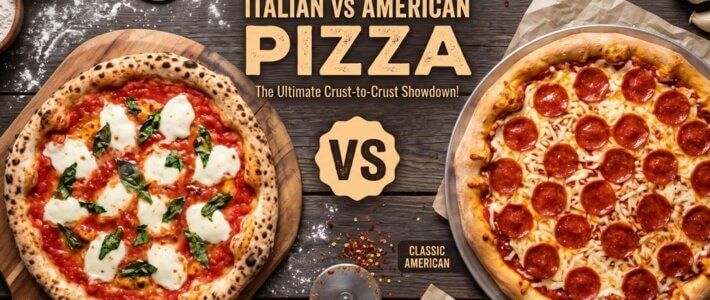
Order a margherita in Naples and you get a plate, a knife and a fork, and a pie barely wider than a dinner plate with three toppings on it. Order a cheese pie in New Jersey and you get a box, eight slices, and enough mozzarella to insulate a garage. Italian pizza vs American pizza is one of those comparisons where everyone assumes one must be the real thing and the other a knockoff. That is not quite what happened.

What actually happened is that a very specific dish from a very specific city travelled four thousand miles, landed in kitchens with different flour, different tomatoes and different ovens, and adapted. Both versions are legitimate. They are just solving different problems.

Here is the thing though. Once you know the five or six places where they split, you can taste the difference instead of just sensing it. Let me walk through them.

Start With What Pizza Actually Was

Before the comparison makes sense, it helps to know the starting point. Flatbread with things on it goes back thousands of years, long before tomatoes ever reached Europe. The dish most people mean by pizza, though, formalised in Naples in the 1700s and 1800s as cheap food for working people. Thin base, quick bake, minimal toppings, eaten fast.

That matters because the Neapolitan pie was never designed to be a meal for four. It was a single portion, sold in the street, built to be made in ninety seconds. Almost every difference that follows traces back to that one fact. The longer history of pizza fills in the timeline, and the structured record of the dish maps out how the regional branches connect.

Then Italian immigrants brought it to New York, Boston, Philadelphia and Chicago in the late 1800s and early 1900s. And the dish started changing almost immediately, because it had to.

The Dough Is the First Fork in the Road

Traditional Neapolitan dough is about as simple as food gets. Flour, water, salt, yeast. No oil, no sugar, nothing else. It ferments slowly, sometimes for a full day, and that long rest is where the flavour comes from rather than from anything added.

American dough usually adds two things: oil and sugar. The oil makes the crumb softer and helps it keep for longer, which matters when a pie might sit in a box for twenty minutes on a drive home. The sugar helps the crust brown faster at the lower oven temperatures most American pizzerias run.

Neither is cheating. They are adjustments to a different set of conditions. A Naples pizzaiolo working a wood oven at nine hundred degrees does not need sugar to get colour on a crust. A deck oven at five fifty does.

The flour differs too. Italian pizza flour is typically finely milled soft wheat, which produces a tender, extensible dough. American pizzerias lean toward higher protein bread flour, which builds more gluten and gives you a crust strong enough to hold a slice horizontally while you fold it. That is not an accident. The fold is an American requirement.

Sauce: Cooked Down Versus Barely Touched

This one surprises people the most.

Traditional Italian pizza sauce is often not cooked at all before it goes on the pie. Crushed San Marzano tomatoes, a pinch of salt, maybe a little olive oil and basil. That is it. The sauce cooks in the oven, in the ninety seconds the pizza is in there, and it tastes bright and slightly acidic because nothing has had time to caramelise.

American pizza sauce is usually simmered beforehand, often for an hour or more, with oregano, garlic, onion powder and frequently a little sugar to round off the acidity. The result is deeper, sweeter and thicker. It clings to the dough instead of soaking in.

You know what? The sugar in American sauce gets mocked a lot, and some of that criticism is fair when it goes too far. But there is a practical reason behind it. Canned tomatoes grown and processed in the United States tend to run more acidic than the volcanic soil tomatoes around Mount Vesuvius. A pinch of sugar corrects that. The problem is only when a kitchen uses a handful instead of a pinch.

Cheese, and Why There Is So Much More of It Here

A Naples margherita gets torn pieces of fresh mozzarella, usually buffalo milk, scattered across the surface. There are gaps. You can see sauce between the clumps. The cheese melts into pools rather than forming a sheet.

American pizza uses low moisture mozzarella, shredded, spread edge to edge. It browns rather than pooling, it stretches when you pull a slice away, and there is simply far more of it by weight.

Why? Because fresh mozzarella carries a lot of water, and in an oven that only hits five fifty rather than nine hundred, that water does not evaporate fast enough. You end up with a soggy centre. Low moisture mozzarella was the workaround, and it turned out people loved it. It became the point rather than the compromise.

There is a small contradiction here worth naming. American pizza is often called the heavier version, and by weight it usually is. Yet a proper Neapolitan pie eaten whole, as one person’s dinner, is not a light meal either. The difference is less about richness and more about how it is portioned. One is a plate for one. The other is a pie for a table.

The Oven Changes Everything Downstream

If you had to point at a single cause for all of the above, it would be the oven.

A Neapolitan wood oven runs somewhere around eight hundred to nine hundred degrees. A pie goes in and comes out in sixty to ninety seconds. The edge puffs violently and chars in spots, the centre stays soft and slightly wet, and the whole thing is structurally incapable of being picked up without drooping. Hence the knife and fork.

An American deck oven runs five hundred to six hundred. A pie takes eight to twelve minutes. That longer bake dries the base, crisps the bottom, and produces a slice you can hold. Everything else, the sugar, the oil, the higher protein flour, the drier cheese, exists to make that longer bake work.

Italian Pizza vs American Pizza, Side by Side

FeatureItalian (Neapolitan)American
DoughFlour, water, salt, yeastOften adds oil and sugar
FlourFinely milled soft wheatHigher protein bread flour
SauceRaw crushed tomatoesSimmered, herbed, often sweetened
CheeseFresh mozzarella, in clumpsLow moisture, shredded, edge to edge
ToppingsOne or two, often none beyond cheeseMany, by request
Oven800 to 900 degrees, wood fired500 to 600 degrees, deck or conveyor
Bake time60 to 90 seconds8 to 12 minutes
SizeAbout 10 to 12 inches, one person16 to 18 inches, shared
How it is eatenKnife and fork, wholeBy the slice, folded

What About Everything in Between?

Here is where the neat two column table starts to leak, because neither side is one thing.

Italy has more than the Naples pie. Roman pizza comes thin and cracker crisp, nothing like Neapolitan. Pizza al taglio is baked in long trays and sold by the slice, cut with scissors and sold by weight. Sicilian pizza is thick and spongy, often with no mozzarella at all, topped instead with onions, breadcrumbs and pecorino.

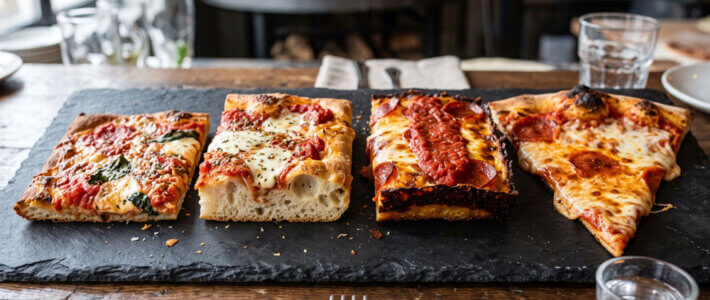
And America has even more branches. New York thin, Chicago deep dish, Detroit pan, New Haven coal fired, California with its fussy toppings. We pulled the square and pan styles apart separately in a piece on the main pizza styles if you want the detail, and the thin round debate gets its own treatment in NJ pizza versus NY pizza.

Some American styles are actually closer to Italian ones than they are to each other. Sicilian and Detroit are cousins. A grandma pie is arguably closer to a Roman tray pizza than to a New York slice. The family tree branches more than once.

Which One Should You Actually Want?

Depends entirely on what you are doing.

  • Sitting down for a proper dinner? The Italian style rewards attention. It is at its best in the first four minutes after it leaves the oven and loses a lot after that.
  • Feeding a group, or eating in the car? American, no contest. It was engineered for exactly that. It travels, it reheats, it portions cleanly.
  • Want to taste the tomato? Italian style, where the sauce is barely touched.
  • Want the cheese pull? American. Fresh mozzarella does not stretch the same way.

Honestly, the most useful thing to know is that an Italian American pizzeria is not trying to be a Naples pizzeria and failing. It is doing something else, built over a century in neighbourhoods like this one. The dishes on an Italian American menu, the parm sandwiches, the baked pastas, the pies, all grew out of the same adaptation. If that history interests you, our piece on what people really want from an Italian restaurant gets into how those menus came together.

A customer who spent a year working in Milan told us something that stuck. “I used this as my yardstick when I came back, and honestly I stopped comparing after a month. Over there a pizza is my dinner. Here it is how my family eats on a Friday. Different jobs.” Our customers are really happy with the classic round pies, and the comment we hear most is that they hold up on the drive home, which is the whole point of the style.

A Few Things That Are Not Actually Differences

Some of the folklore around this does not hold up.

Pineapple is not an American invention. It came out of Ontario, Canada, in the 1960s. Italians do mock it, fairly consistently, but the blame is misdirected.

Italians do fold pizza. Not the whole pie, but a Neapolitan portafoglio is a pizza folded into quarters and eaten walking down the street. The fold is not purely a New York thing.

Thin crust is not automatically Italian. A New York slice is thinner through the middle than a Neapolitan pie. Thinness is not the marker people think it is.

And one more that often comes up. Folded, stuffed and rolled items like the calzone and stromboli split along similar lines, with one genuinely Italian and one invented in Pennsylvania. Same pattern, different dish.

Where to Taste the Difference Around Here

North Jersey is a good place to run this experiment, because both traditions are within driving distance. Wood fired Neapolitan spots have opened across Morris County over the last decade, and the older Italian American pizzerias along Route 10 have been doing the other version for generations.

Order a margherita at one and a plain cheese at the other in the same week. The contrast is much clearer back to back than it is from reading about it. If you want to see how a long running Randolph kitchen handles the round pie and the rest of the Italian American menu, the full menu lays it out, and hours are on the contact page.

Two versions of the same idea, a century apart. There is no need to pick a side.

Frequently Asked Questions

What is the main difference between Italian and American pizza?

The oven, and everything that follows from it. Italian pizza bakes at 800 to 900 degrees in 60 to 90 seconds, so it uses simple dough, raw tomato sauce and fresh mozzarella. American pizza bakes at 500 to 600 degrees for 8 to 12 minutes, so the dough adds oil and sugar, the sauce is simmered, and the cheese is low moisture so it does not make the base soggy.

Is Italian pizza healthier than American pizza?

Per slice it usually carries less cheese and fewer toppings, so fewer calories. But a Neapolitan pie is a single serving eaten whole, while an American pie is shared, so the difference per person is smaller than it looks. Portion size matters more than style here.

Why do Italians eat pizza with a knife and fork?

Because a Neapolitan pizza comes out of the oven with a soft, slightly wet centre that will not support itself if you lift a slice. It is served whole as one portion, so cutting it at the table is practical rather than formal. Folded street versions are eaten by hand.

Does real Italian pizza have sugar in the dough?

Traditional Neapolitan dough does not. The official specification is flour, water, salt and yeast only. Sugar appears in many American doughs because it helps the crust brown at lower oven temperatures and extends shelf life.

Which came first, Italian or American pizza?

Italian, by a long way. The Neapolitan pie took its modern form in the 1700s and 1800s. American pizza grew out of it after Italian immigrants arrived in the late 1800s and early 1900s and adapted the recipe to local flour, tomatoes and ovens.

Hero vs Sub vs Hoagie: Is There Really Any Difference?

Hero vs Sub vs Hoagie: Is There Really Any Difference?

Hero vs Sub vs Hoagie: Is There Really Any Difference?

Walk into a deli in Newark and ask for a hoagie, and somebody behind the counter might squint at you. Say sub in South Philly and you will probably get corrected, politely or otherwise. Hero vs sub vs hoagie is one of those arguments that sounds like it should have a clean answer. It mostly does not. What it has instead is geography, a few good origin stories, and a lot of people who are very sure they are right.

Here is the short version before we get into the fun part. All three names describe the same basic thing: a long, split roll stuffed with meats, cheese and toppings. The bread is the same shape. The fillings overlap almost completely. What changes is where you are standing when you order it, and sometimes a few small habits about how it is built.

So why does anyone care? Because food words are never only about food. They are about where you grew up.

Same Sandwich, Three Passports

Think of it like soda versus pop versus coke. Same fizzy drink, different map. The long sandwich works the same way, and the dividing lines run straight through the Northeast.

  • Hero is the New York City word, and you will hear it across the boroughs, Long Island and parts of North Jersey.
  • Hoagie belongs to Philadelphia and the Delaware Valley, which means South Jersey says it with total confidence.
  • Sub is the national default. Chains spread it everywhere, so it is the word most Americans reach for when they are not thinking about it.
  • Grinder is the New England cousin, common in Connecticut, Rhode Island and Massachusetts, and it usually hints at a hot sandwich.

New Jersey sits right on the fault line, which is exactly why the argument gets so loud here. The state already splits itself in half over pork roll versus Taylor ham. Of course it would split over sandwiches too.

Where the Hoagie Got Its Name

The most repeated story points to Hog Island, a shipyard in Philadelphia that ran during World War One. Workers there supposedly ate huge Italian sandwiches for lunch, and the “hoggies” eaten on Hog Island slowly turned into hoagies. It is a good story. Food historians are not all convinced by it, and there are rival versions involving street vendors and a jazz musician turned sandwich seller.

What nobody disputes is how seriously Philadelphia takes it. The city named the hoagie its official sandwich back in 1992, which tells you something about civic priorities. And honestly? Fair enough.

A classic Philly hoagie leans Italian: a seeded or soft roll, layers of salami, capicola and provolone, shredded lettuce, tomato, onion, oregano, and a drizzle of oil and vinegar. Mayo is a regional sore point. Some shops refuse outright. Others will put it on without asking.

The Hero and Its Very New York Story

The hero comes out of New York in the 1930s, and the name is usually credited to a food writer who described the sandwich as so big you had to be a hero to finish it. Whether that is the true origin or just the quote that stuck, it fits the sandwich perfectly.

New York heroes lean hard into the hot side of the menu. Chicken parm, meatball parm, sausage and peppers, eggplant parm. Anything that comes smothered in red sauce and melted mozzarella, pressed into a roll, and wrapped in paper that goes translucent in about ninety seconds. Cold cuts count too, but when a New Yorker says hero, there is a decent chance marinara is involved.

That hot sandwich tradition comes straight from Italian American kitchens, which borrowed the flavors of the old country and rebuilt them around cheap, plentiful bread. The broader story of how Italian cooking changed after crossing the Atlantic is full of dishes like this, ones that would baffle a cook in Rome but feel completely natural in Brooklyn.

So Why Is It Called a Sub?

Look at the shape. Long, rounded at the ends, a little bit bulky in the middle. It looks like a submarine, and that is the simplest explanation for the name.

One popular story puts the origin near the submarine base in Groton, Connecticut, during the Second World War, where a sandwich shop sold long rolls to Navy crews. Again, nobody can prove it beyond doubt. But it is plausible, and it explains why the word caught on so fast once sandwich franchises started opening across the country in the decades after the war.

Here is the funny part. Sub is technically the least regional word of the three, but that is exactly what makes some Northeasterners bristle at it. It sounds like a chain. It sounds like somewhere with a drive through. Say sub at an old neighborhood deli and you are not wrong, exactly. You just sound like you are visiting.

Wait, What About the Grinder?

You cannot have this conversation without somebody from Connecticut raising a hand. A grinder is the New England name, and the explanation depends on who you ask. Some say it came from dockworkers, who were nicknamed grinders. Others say the chewy bread took real effort to grind through with your teeth.

In a lot of places the word also signals heat. A grinder is often toasted or baked until the cheese melts and the bread crisps at the edges. So if a menu offers both subs and grinders, the grinder is usually the warm one. Small detail, but useful when you are staring at a board trying to decide.

And while we are on tangents, the po boy in New Orleans and the spuckie in parts of Boston belong to the same family tree. Every port city with Italian immigrants seems to have built its own long sandwich and given it its own name. Which says something rather lovely about how food travels.

Hero vs Sub vs Hoagie: The Actual Differences

Let me be fair to the people who insist there is a real difference. There are a few, they are just softer than the arguments suggest.

NameHome TurfUsual BreadLeans TowardTypical Tell
HeroNew York City, North JerseyItalian loaf, crusty outsideHot, sauced fillingsParm sandwiches, red sauce
HoagiePhiladelphia, South JerseySoft or seeded rollCold Italian meatsOil, vinegar, oregano
SubNationwideSoft long rollEitherChain menu vocabulary
GrinderNew EnglandCrusty, often toastedHot and meltedBaked until the cheese bubbles

So the real answer to hero vs sub vs hoagie comes down to three things: the roll, the temperature, and the zip code. Not the fillings. Italian cold cuts show up under every one of those names, and so does a meatball sandwich.

What Makes Any of Them Good

Names aside, a great long sandwich lives or dies on the bread. Get that wrong and nothing else can save it. The roll needs a crust sturdy enough to hold oil and tomato without collapsing, but a soft enough crumb that you are not wrestling it. Too hard and it shreds the roof of your mouth. Too soft and it turns to paste before you reach the halfway mark.

After bread comes layering, and this is where good shops quietly separate themselves. Meats go in folded, not flat, so there is air between them. Cheese sits next to the bread to act as a moisture barrier. Wet things like tomatoes and dressing go in the middle, away from the crust. It sounds fussy. It is the difference between a sandwich that holds up on a car ride and one that falls apart on your lap.

Then balance. A good Italian needs acid from the vinegar or peppers to cut through all that cured fat. A hot parm sandwich needs enough sauce to taste like something, but not so much that the bottom half dissolves. Honestly, most of it is restraint.

A regular who orders for his crew every Friday told us, “I used this as my way of settling the argument at work. Half the guys are from Philly and call everything a hoagie, the other half grew up in Bergen County. Now I just order a tray and call it lunch.” Our customers are really happy with the hot subs for group orders, and what we hear most is that they travel better than people expect.

Feeding a Crowd With Long Sandwiches

Here is where the long sandwich quietly beats pizza. It can be built ahead, cut into portions, and it stays good at room temperature for longer. For an office lunch, a youth sports team, or a garage full of people watching a game, a sandwich platter is easy to share and easy to portion.

A rough rule: a full length roll cut into four pieces feeds two adults as a meal, or four as part of a spread. Mix hot and cold options so nobody is stuck with a sandwich that went lukewarm in the corner. If you are planning a mixed order with pies, the same logic as our guide on how much pizza per person applies. Count heads, round up, and do not overdo the variety.

For bigger events it helps to call ahead. A kitchen can build twenty sandwiches properly if it knows they are coming, and it can build them badly if they arrive as a surprise. The catering options are set up for exactly that kind of planning, and a sandwich tray alongside a couple of pies makes for a crowd pleasing game day spread.

The Jersey Answer, For Whatever It Is Worth

If you live in Morris County, you probably grew up hearing sub more than anything else, with hero mixed in from the New York side of the family. Hoagie shows up once you drive south of Trenton. None of these are wrong. They are just local accents for the same lunch.

It is the same kind of friendly rivalry that shows up in the NJ pizza versus NY pizza debate, where tiny differences carry enormous hometown pride. And much like the calzone and stromboli confusion, the names get used loosely by customers and kitchens alike.

If you want to see what a Randolph kitchen puts in its hot and cold subs, the full menu lays it out, and regulars share their favorites in local reviews on Yelp. Hours and ordering details sit on the contact page.

Call it whatever you like when you order. The kitchen will know what you mean.

Frequently Asked Questions

Is a hoagie the same as a sub?

Essentially yes. Both are long split rolls filled with meats, cheese and toppings. Hoagie is the Philadelphia and South Jersey name and usually implies a cold Italian build with oil and vinegar. Sub is the national term and covers both hot and cold versions.

Why is it called a hero sandwich?

The name took hold in New York during the 1930s. The most repeated explanation is that the sandwich was so large you needed to be a hero to finish it. Nobody can prove that is the original source, but it is the story most people know.

What is a grinder sandwich?

A grinder is the New England name for a long sandwich, and it often means a hot one that is toasted or baked until the cheese melts. The name may come from dockworkers, who were nicknamed grinders, or from the chewing effort the crusty bread required.

What do people in New Jersey call it?

It depends which half of the state you are in. North Jersey mostly says sub, with hero common near New York. South Jersey, closer to Philadelphia, says hoagie. Central Jersey, true to form, uses all three.

What is on a classic Italian sub?

Usually salami, capicola, ham and provolone on a long Italian roll, with lettuce, tomato, onion, hot or sweet peppers, oregano, and a finish of oil and vinegar. Some shops add mortadella or prosciutto. Mayonnaise is optional and, in some places, controversial.

Chicken Francese vs Chicken Piccata: The Real Difference

Chicken Francese vs Chicken Piccata

Chicken Francese vs Chicken Piccata: What Actually Separates Them?

Both arrive golden. Both sit in a shiny lemon and butter sauce. Both come draped over a nest of pasta, and both cost about the same on most Italian American menus. So when you are looking at chicken francese vs chicken piccata, it is easy to assume they are two names for one dish. They are not, though the gap is smaller than you might expect. It comes down to one step at the prep station and one ingredient in the pan.

Once you know what those two things are, you will spot the difference from across the table. Let me explain.

The Thirty Second Answer

Francese is dredged in flour, then dipped in beaten egg, then pan fried. That egg coat puffs slightly and turns soft and golden, almost like a thin omelet wrapped around the chicken. The sauce is lemon, butter, white wine and stock.

Piccata is dredged in flour only, no egg, then sautéed. The crust is thinner and a little crisper. The sauce is also lemon, butter and white wine, but with capers stirred in, and usually a handful of chopped parsley.

Egg wash versus capers. That is the core of it. Everything else is detail, and the details are where things get interesting.

Where Francese Comes From

Francese means French in Italian, which is a little funny for a dish that is about as Italian American as it gets. The name most likely refers to the egg batter technique, which older Italian cooks associated with French cooking. It is not a traditional dish from any particular region of Italy. It grew up in American kitchens, mostly in the Northeast, after the Second World War.

Rochester, New York, has a particularly strong claim to it. Restaurants there have been serving Chicken French for decades, and locals will tell you, with feeling, that nobody else does it right. You will also see it spelled Francaise on a lot of New Jersey menus. Same dish, different spelling, and nobody at the counter will blink either way.

Before chicken got popular, the original version was often made with veal. Veal francese still shows up on plenty of menus, and so does shrimp or fillet of sole. The technique works on anything thin and delicate.

Where Piccata Comes From

Piccata has a clearer Italian lineage. Thin veal cutlets cooked with lemon, often called scaloppine al limone, are a genuine Italian preparation. The word piccata is usually explained as meaning something like sharp or piquant, which suits a sauce built on lemon and briny capers.

When the dish crossed to America, chicken slowly replaced veal because it was cheaper and more widely available. Capers became the signature, even though plenty of Italian versions skip them. That is the pattern with a lot of Italian cooking that changed after emigration: the bones of the dish stay Italian, and the details get rebuilt around what American markets had on the shelf.

Chicken Francese vs Chicken Piccata, Side by Side

FeatureFrancesePiccata
CoatingFlour, then eggFlour only
TextureSoft, puffy, goldenThin, lightly crisp
Sauce baseLemon, butter, white wine, stockLemon, butter, white wine
Signature ingredientThe egg batterCapers
FlavorMellow, rich, butterySharp, briny, bright
OriginItalian American, postwar NortheastItalian roots, Americanized
Often served withAngel hair or linguineLinguine, spinach or roasted potatoes

What They Taste Like, Honestly

Francese is the gentler of the two. The egg coat soaks up the sauce like a sponge, so every bite tastes of butter and lemon without either one shouting. It is comfort food. If you grew up on it, it probably tastes like somebody’s Sunday dinner.

Piccata is louder. The capers bring salt and a slight vinegary snap, and without the egg to soften things, the lemon comes through sharper. It feels lighter even though it has nearly the same amount of butter. Here is the small contradiction worth noticing: piccata tastes lighter and brighter, yet francese often feels less heavy in the stomach, because the egg coat absorbs sauce instead of letting it pool on the plate. Both are true. It just depends what you mean by light.

If you love bold, salty, acidic flavors, the kind of person who orders extra lemon wedges, you will lean piccata. If you want something soft and familiar at the end of a long week, francese wins.

Which One Should You Order?

A few quick rules of thumb, since this is the question most people actually have.

  • Not a caper fan? Francese, every time. Capers are divisive and piccata does not work without them.
  • Feeding kids? Francese. The mild egg coat and soft texture go down easier with younger eaters.
  • Want something that pairs with a crisp white wine? Piccata. The acidity matches beautifully.
  • Ordering for a group? Francese holds up better on a catering tray, since the egg coat stays moist while it waits.

That last point matters more than it sounds. Piccata is at its best straight from the pan, when the crust still has a little snap. After twenty minutes in a covered tray it softens. Francese barely changes, which is why it shows up so often at family parties and catered events.

One customer who orders for her family every other Sunday put it like this: “I used this as my compromise dish for years. My husband wants something with a little bite and my mother wants something gentle, so I order the francese for the table and a side of lemon for him. Nobody complains.” Our customers are really happy with our Chicken Francese, and the feedback we hear most is that it reheats better than they expect.

Making Either One at Home

Both dishes are weeknight friendly, maybe thirty minutes start to finish. A few kitchen tips separate a good plate from a soggy one.

Pound the chicken thin. Aim for about a quarter inch, evenly. A thick breast cooks unevenly, and by the time the center is done the outside is overdone. Put it between plastic wrap and use a heavy pan if you do not own a mallet.

For francese, flour first, then egg, then straight into the pan. Do not let the egg-coated cutlets sit around. The coating slides off. A spoonful of grated parmesan whisked into the egg adds depth, and plenty of Jersey cooks swear by it.

For piccata, shake off the excess flour. Too much and the sauce turns gluey. You want a whisper of coating, not a jacket.

Finish the sauce off the heat. Swirl in the cold butter after the pan comes off the burner. That is how you get a glossy, emulsified sauce instead of a greasy one. It is a small restaurant trick, and it makes a real difference.

One more thing on flour. Both dishes rely on a wheat dredge, so neither is naturally gluten free. Rice flour or a gluten free flour blend works as a swap at home, and the egg coat on francese actually hides the difference well. Pair it with gluten free pasta and you have a plate that works for the whole table.

What to Put Under It

Traditionally both sit on thin pasta, angel hair or linguine, which catches the sauce. Sautéed spinach with garlic is a common swap for a lighter plate. Roasted potatoes work too, especially with piccata, where the capers and potatoes play well together.

And while we are wandering, a quick word on the third cousin that often shares the menu: chicken marsala. It uses the same flour dredge as piccata, but the sauce swaps lemon for sweet marsala wine and mushrooms. Rich, earthy, and entirely different in mood. If francese and piccata are summer, marsala is November.

Beyond Chicken: Veal, Shrimp and Fish

Here is something people forget. Both of these are techniques first and chicken dishes second. Swap the protein and the method barely changes.

Veal is the old-school choice, and many Jersey menus still carry veal francese and veal piccata side by side. Veal cutlets are thinner and more tender than chicken, so they cook in about half the time. Shrimp francese is another favorite, with the egg batter clinging to each shrimp before a quick fry. Fillet of sole or flounder works beautifully with the francese method too, since the egg coat protects delicate fish from falling apart in the pan.

Piccata stretches just as easily. Swordfish piccata, salmon piccata, even thin slices of eggplant for a vegetarian plate. As long as the base is thin and cooks fast, the lemon and caper sauce will do the rest.

A Few Ordering Tips That Help

Ask how the sauce is made. Some kitchens thicken their lemon sauce with a little flour or cornstarch, which gives a creamier finish. Others keep it thin and glossy. Neither is wrong, but if you prefer one style, it is worth asking.

Ask for extra sauce if you are getting it with pasta. Angel hair drinks sauce fast, and a dry plate is a sad plate. Most kitchens will happily add a little more for no charge.

And if capers are the only thing stopping you from ordering piccata, just ask for them on the side. Plenty of cooks will do it, and you can add a few until it tastes right to you.

Finding Them Around Morris County

Both dishes live on nearly every Italian American menu in North Jersey, usually in the chicken entree section right next to the parm. For a slow dinner out, either one makes a solid date night pick. For a quicker weeknight, plenty of spots along Route 10 in Randolph will pack it up for takeout.

If you want to see how a local kitchen handles its chicken entrees, the full menu lists them alongside the pasta dishes, including a few crowd favorites like the vodka sauce plates. Regulars share honest takes in reviews on Yelp, and hours are on the contact page.

Egg or no egg. Capers or no capers. Once you know that, you will never mix the two up again.

Frequently Asked Questions

What is the main difference between francese and piccata?

The coating and the capers. Francese is dredged in flour and then dipped in egg before frying, which gives a soft golden batter. Piccata is dredged in flour only and its lemon butter sauce includes capers. Francese tastes mellow and buttery, while piccata tastes sharper and brinier.

What does francese mean?

Francese is the Italian word for French. The name most likely refers to the egg batter technique, which Italian cooks associated with French cooking. The dish itself is Italian American rather than traditionally Italian.

Is chicken francaise the same as chicken francese?

Yes. Francaise is simply the French spelling, and you will see both on menus across New Jersey and New York. The dish, the egg batter and the lemon butter sauce are the same.

Is chicken piccata the same as chicken marsala?

No. Both start with flour dredged cutlets, but piccata uses a lemon, butter and caper sauce, while marsala uses sweet marsala wine and mushrooms. Piccata is bright and tangy. Marsala is rich and earthy.

Which is healthier, francese or piccata?

They are close. Piccata skips the egg batter, so it carries slightly fewer calories from the coating, but both sauces rely on butter. Asking for the sauce on the side and swapping pasta for spinach makes a bigger difference than choosing one dish over the other.

Garlic Knots vs Garlic Bread: What Is the Difference?

Garlic Knots vs Garlic Bread

Garlic Knots vs Garlic Bread: Which One Belongs Next to Your Pie?

You order a large pie and the person on the phone asks, “Anything else?” And there it is, the small decision that somehow feels bigger than it should. Garlic knots vs garlic bread. Both are warm, both smell incredible, both vanish before the pizza box is fully open. But they are made in different ways, from different starting points, and they do slightly different jobs on the table.
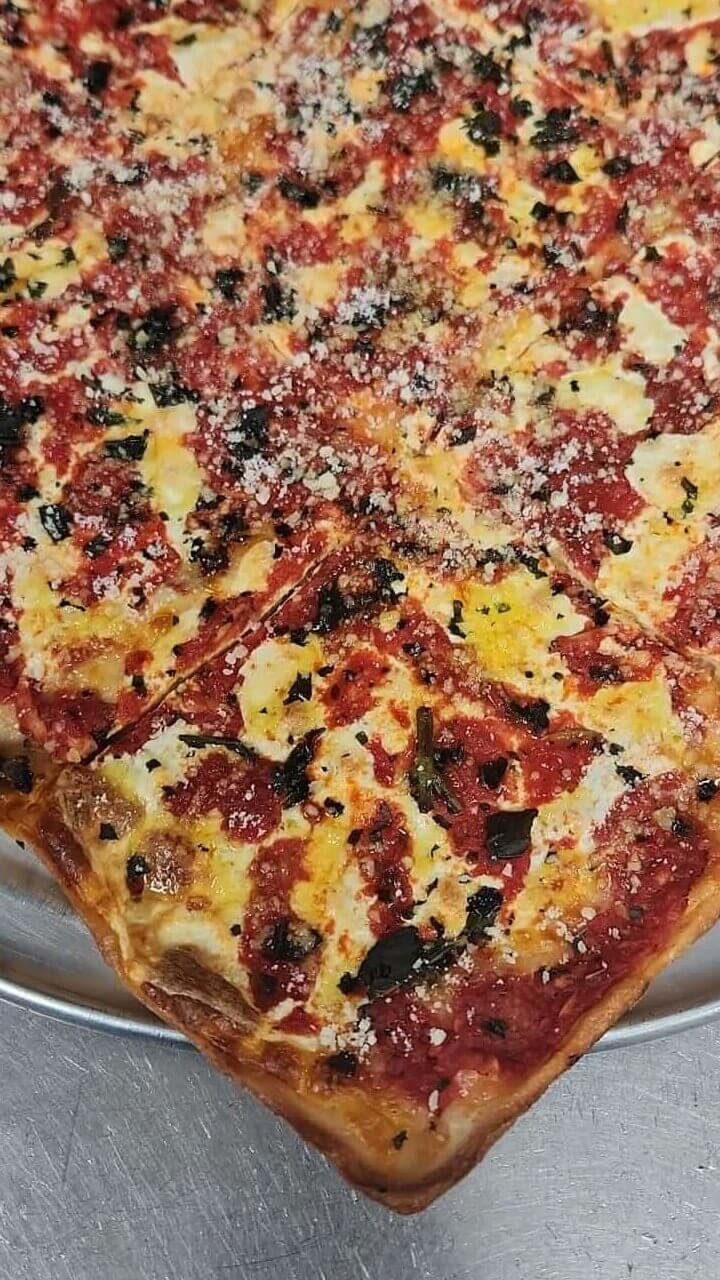
So let us sort it out. Quick answer first, then the stuff that actually helps you choose.

The Short Answer

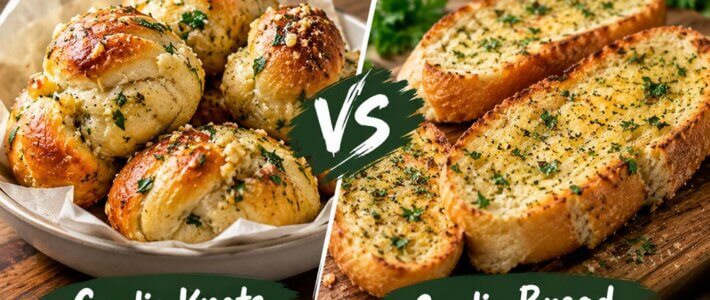
Garlic knots are made from pizza dough. Strips of raw dough get tied into loose knots, baked until puffy, then tossed while hot in garlic, butter or olive oil, parsley and grated cheese. Soft and chewy inside, glossy outside.

Garlic bread starts with a loaf that is already baked. Usually an Italian or French loaf, split or sliced, spread with garlic butter, then toasted or broiled. Crisp edges, soft middle, sometimes blanketed in melted mozzarella.

Raw dough versus finished bread. That single difference explains almost everything else about taste, texture and how well each one travels.

How Garlic Knots Came to Be

Garlic knots are a pizzeria invention, and a thrifty one. Most stories trace them to New York area pizzerias sometime in the middle of the twentieth century, where cooks were left with scraps of dough at the end of a shift. Throwing it away felt wasteful. Tying it into little knots, baking it, and drowning it in garlic butter felt a lot better.

Nobody has a birth certificate for the first knot. What we know is that they spread fast through the Northeast, especially in New York and New Jersey, and became the default side order at countless slice shops. They are a very regional thing, too. Travel far enough west and plenty of pizzerias have never heard of them.

Because they come from pizza dough, knots taste like the crust of a good pie. That is the whole appeal. If you are the person who eats the crust edge first, knots are basically a basket of your favorite part. And if you want a sense of how many ways that same dough can be shaped, our look at different pizza styles shows just how much a kitchen can do with one batch.

Where Garlic Bread Fits In

Garlic bread has older roots. Italians have been rubbing garlic on toasted bread and drizzling it with olive oil for centuries, a tradition you will know as bruschetta, or fettunta in Tuscany. That is the ancestor.

The version most Americans picture, a buttery, bright orange-flecked loaf wrapped in foil, is an Italian American creation that took off in the 1950s. Butter replaced olive oil because it was cheaper and familiar. Garlic powder sometimes replaced fresh garlic because it was convenient. Some purists wince at that. Most people just keep eating.

Here is the funny twist. Garlic bread is the version with the longer history, yet garlic knots feel more old-school when you walk into a Jersey pizzeria. Tradition is funny that way. It is less about age and more about what your grandmother ordered.

Garlic Knots vs Garlic Bread, Side by Side

FeatureGarlic KnotsGarlic Bread
Starting pointRaw pizza doughAn already baked loaf
ShapeSmall tied knotsSlices or split halves
TextureSoft, chewy, pillowyCrisp edges, soft center
Garlic appliedTossed on after bakingSpread on before toasting
Usual fatOlive oil, butter, or bothMostly butter
CheeseGrated parmesan on topOften melted mozzarella
Travels well?Yes, stays softLoses crunch in a closed box
Best withPizza and marinaraPasta and red sauce dishes

Texture Is the Real Deciding Factor

Taste-wise, they overlap more than you might think. Both are garlic, fat, salt and bread. The real split is how they feel when you bite in.

Knots are chewy. The dough was never baked before, so the crumb stays elastic and a little bouncy, like the rim of a New York slice. The garlic butter soaks into every fold of the knot, which means you get flavor in the nooks, not just on top.

Garlic bread is about contrast. The broiler crisps the cut edges while the inside stays soft. Add mozzarella and you get a molten, golden layer on top that stretches when you pull a slice away. It is richer, heavier, and more of a dish in its own right.

Think of it this way. Knots are a sidekick. Garlic bread wants a supporting role but secretly thinks it deserves top billing.

Which One Should You Order?

  • Getting pizza? Knots. They are made from the same dough, so they match the meal, and they are perfect for dragging through marinara between slices.
  • Getting pasta? Garlic bread. It is built for mopping up red sauce or vodka sauce at the bottom of the bowl.
  • Delivery with a long drive? Knots. Garlic bread steams inside a closed container and loses its crunch. Knots were never crunchy to begin with, so they arrive the way they left.
  • Feeding kids? Knots again. Easy to grab, no knife needed, and they come in portion-sized pieces.

Honestly, a lot of pizzerias will tell you knots are the single most common thing added to a plain cheese pie order. There is a reason. Pizza and knots are a matched set.

A mom who orders for her son’s travel soccer team told us, “I used this as my secret weapon for team dinners. I order the pies, then double the garlic knots, because the kids go through those before anybody touches a slice.” Our customers are really happy with our garlic knots, and the thing we hear most is that they are the first thing gone at every party.

What Makes a Great Garlic Knot

The dough has to be proofed properly. Underproofed dough bakes up dense and tight. A good knot has an open, airy crumb inside, the same way a good pizza rim does.

The garlic should be fresh and cooked just enough. Raw minced garlic is harsh and bitter. Garlic gently warmed in butter or oil turns sweet and mellow. The best shops warm the garlic in the fat first, then toss the knots in that mixture straight out of the oven.

The toss happens while the knots are hot. Hot bread drinks in the garlic butter. Cold bread just gets greasy on the surface. Timing matters more than the recipe.

The finish is simple. Chopped parsley, a snowfall of grated parmesan or pecorino, maybe a pinch of salt. Some places add red pepper flakes or oregano. Too many extras and it stops tasting like a knot.

And please, the marinara on the side should be good. A great knot dragged through watery sauce is a small tragedy.

How Many to Order for a Group

Garlic bread goes further per order since a single loaf cuts into eight or ten pieces. One loaf covers four to six people as a side. If you are already planning pies, our guide to how much pizza per person helps you size the whole order so nobody goes hungry and you are not eating leftovers until Wednesday.

For bigger gatherings, trays of knots are a simple win. They hold heat well, need no cutting, and disappear quietly. Pair them with a couple of pies for a game day spread, or ask about catering trays when the headcount gets serious.

Reheating Without Ruining Them

Here is where many people go wrong. The microwave is the enemy of both.

For knots: wrap them loosely in foil and warm them in a 350 degree oven for about six to eight minutes. The foil keeps the steam in so they soften again. If you want a little extra flavor, brush them with a bit of melted butter and a pinch of garlic powder before they go in.

For garlic bread: leave it uncovered and put it straight on the oven rack at 375 for five minutes, then a minute under the broiler. You want the edges crisp again, and foil works against you here.

An air fryer works for both if you keep the time short. Two to three minutes, no more. Longer than that and knots turn into croutons.

A Quick Word on Dietary Needs

Both sides are wheat based, so neither is gluten free by default. Some kitchens do offer gluten free crust or rolls, and a few make a gluten free garlic bread using that dough. If you are ordering for someone with celiac disease, ask about shared prep surfaces and fryers, not only the ingredients. Our page on gluten free pizza covers the questions worth asking.

Also, garlic knots made with butter are vegetarian but not vegan. Versions tossed only in olive oil can be vegan, provided the dough itself contains no dairy. It is always worth checking.

The Bigger Family of Pizza Shop Sides

Knots belong to a whole family of dough-based sides that grew up alongside pizza. Garlic rolls, which are knots baked in a round cluster. Breadsticks, which are longer and usually drier. Zeppole, which are fried dough dusted in sugar for dessert. And rolled items that step up into full meals, which is where the calzone and stromboli conversation comes in.

If you are curious how pizza itself grew from flatbread into the round pie we know, the history of pizza is a good read, and the structured record for pizza shows how its many regional variations connect.

Want to see what a Randolph pizzeria actually offers on the side? The full menu lists the knots, the bread and everything else, and the contact page has hours and ordering details.

Knots or bread. Pizza or pasta. Honestly, nobody has ever regretted ordering both.

Frequently Asked Questions

Are garlic knots made from pizza dough?

Yes. Garlic knots are made from the same raw dough used for pizza. It is cut into strips, tied into knots, baked, and then tossed while hot in garlic, butter or olive oil, parsley and grated cheese.

What is the difference between garlic knots and breadsticks?

Shape and seasoning. Knots are tied into small rounds and coated in garlic butter after baking, which keeps them soft and glossy. Breadsticks are long and straight, usually brushed lightly or seasoned before baking, and tend to be drier.

How do you reheat garlic knots?

Wrap them loosely in foil and warm them in a 350 degree oven for six to eight minutes. The foil traps steam so they soften again. Avoid the microwave, which makes them tough once they cool.

Is garlic bread Italian?

Its roots are. Italians have long rubbed garlic on toasted bread with olive oil, a dish known as bruschetta. The buttery, foil wrapped garlic bread most Americans know is an Italian American version that became popular in the 1950s.

Which goes better with pizza, garlic knots or garlic bread?

Garlic knots usually win with pizza because they are made from the same dough and travel well in a delivery box. Garlic bread pairs better with pasta and saucy entrees, where its crisp edges can soak up the sauce.

Pizza Styles Explained: Grandma vs Sicilian vs Detroit vs NY Slice

Pizza Styles

Pizza Styles Explained: Grandma vs Sicilian vs Detroit vs NY Slice

Ask four people from four different towns what a proper slice looks like and you will get four confident answers, plus a small argument. Pizza styles are like that. They carry hometown pride, family memory, and a surprising amount of opinion baked right into the crust. One person swears by a floppy triangle they fold in half on the walk to the car. Another will not touch anything that is not cut into squares. Both of them are right, which is honestly the fun part.

Here is the thing though. Most of us order the same thing over and over without ever knowing what separates one pie from another. We know what we like. We just cannot always say why. So let us walk through the four names that show up most often on menus around Morris County and work out what actually makes each one tick.

It Starts With the Pan, Not the Toppings

Before we get into individual names, there is one idea worth holding onto. The biggest differences here come down to two things: what the dough sits in while it bakes, and how long it rested beforehand.

A round pie baked straight on a hot deck behaves nothing like the same dough pressed into an oiled steel pan. Direct stone heat pulls moisture out fast and leaves you with a thin, crisp base. A pan does the opposite. It holds oil against the dough, and that oil essentially fries the bottom while the top bakes. Same flour, same yeast, same hands. Wildly different result.

Toppings matter far less than people assume. Pepperoni is pepperoni whether it sits on a triangle or a square. The pan is where the personality comes from, and once you know that, the rest of this makes a lot more sense.

Alright. Names.

The New York Slice: The One Everybody Pictures

When somebody says pizza with no qualifier attached, this is usually the mental image. Wide round pie, cut into eight generous triangles, thin enough through the middle that the tip droops if you hold it flat.

The dough is lean, meaning there is not much fat in the mix. It gets stretched by hand rather than rolled out, which leaves the outer rim thicker and airier than the center. Then it bakes hot and fast on a deck, usually somewhere north of 500 degrees. Sauce goes on light. Cheese is low moisture mozzarella, chosen because it browns instead of weeping water. The whole thing is engineered to be eaten standing up on a sidewalk.

That fold, by the way, is not a party trick. A slice this wide needs structural support to reach your mouth in one piece. Folding it lengthwise creates a channel that stiffens the whole thing. Basic engineering, really, and every kid in this state figures it out by age seven without being taught.

New Jersey has its own take on the round pie, which is close to its neighbor across the river but not identical. We pulled that apart in a separate piece on NJ pizza versus NY pizza if you want to go down that particular rabbit hole. Fair warning, it is a heated subject.

Sicilian: Thick, Square, and Older Than You Think

Now we cross into pan territory.

Sicilian traces back to sfincione, a spongy focaccia style pie sold by street vendors in Palermo, usually topped with onions, breadcrumbs, anchovies, and no mozzarella at all. The Italian American version that landed in Northeast pizzerias kept the shape and the height but got adopted into a cheese and tomato format that would probably confuse those original vendors a little.

What you get on a menu today is a rectangular pie roughly an inch tall. The crumb inside is open and bready, closer to focaccia than to anything cracker like. The bottom picks up a light fry from the oiled pan. Sauce often sits on top of the cheese rather than underneath it, which is not universal but is common enough to be a useful tell when you are trying to identify what showed up in the box.

A well made Sicilian square holds its shape when you lift it. If it flops in the middle, the dough was underproofed or the pan went into a cold oven. Small things, big consequences.

Worth flagging one point of confusion here. The thick double crusted pies you sometimes see around Easter are a completely different animal, closer to a savory layered pie than to pizza as most people understand it. That one has its own history and its own following, and we gave pizza rustica a separate writeup because lumping it in here would not do it justice.

Grandma Pizza: The Home Kitchen Cousin

Here is where people get tripped up most often. Grandma and Sicilian look similar at a glance. Both square. Both from a pan. But they are genuinely different pies, and the difference comes down to time.

Grandma pizza came out of Long Island home kitchens, made by Italian American women who did not own a deck oven and did not have three hours to let dough rise before dinner. So the dough goes into an oiled sheet pan and gets pushed toward the corners with fingertips, then bakes after a short proof or sometimes almost none at all.

That short rest changes everything. Less rise means a thinner, denser, chewier base. Maybe half an inch tall against the Sicilian full inch. And because the dough spends less time expanding, the oil in the pan crisps the bottom harder, so you get a real crunch that a Sicilian usually will not give you.

Sauce is typically dolloped rather than spread evenly, sometimes over the cheese, sometimes in loose stripes. Sliced fresh garlic and a finishing drizzle of olive oil show up far more often here than on other pan pies. The whole thing tastes homemade because it literally started out that way, in somebody kitchen, on a Tuesday.

It converts people. If you have never had one, that is the pie to try next. We put together a longer look at grandma pizza for anybody ordering their first one and wondering what to expect.

Detroit Style: Where the Cheese Meets the Wall

This is the newcomer on most Northeast menus, and it has been winning converts at a genuinely surprising rate over the last few years.

Detroit style started in automotive shops, baked in blue steel trays originally built to hold small parts on a factory floor. Those pans conduct heat aggressively and have straight tall sides, which sets up the defining feature of the entire style: cheese pushed all the way out to the edge, where it hits hot metal and caramelizes into a crunchy, salty, faintly bitter frame around the whole pie.

That edge has a name among people who care about this stuff. Frico. It is the single reason most people order the style, and it is why the corner pieces vanish first at every table, every time, without fail.

The interior runs light and airy, noticeably more so than a Sicilian, thanks to a wetter dough and a longer proof. Brick cheese is traditional, though plenty of kitchens use a mozzarella blend and nobody complains. And the sauce almost always goes on last, ladled across the top in stripes, which keeps the cheese from steaming and losing the crust it just worked so hard to build.

Round deck baking and square pan baking really are two separate crafts sharing one name. Our Detroit style writeup gets deeper into the pan specifics if that is the part that interests you.

A Side by Side Look at These Pizza Styles

Sometimes a table just says it faster than paragraphs do.

StyleBaseHeightSauceSignature Trait
New YorkDeck oven, no panThin, about a quarter inchUnder the cheeseFolds without cracking
SicilianOiled pan, long proofAround one inchOften over the cheeseBready, focaccia like crumb
GrandmaOiled sheet pan, short proofAbout half an inchDolloped, often on topCrisp fried bottom, fresh garlic
DetroitSteel pan, high wallsAround one inchStriped on lastCaramelized cheese edge

So Which One Should You Actually Order?

Depends on the night, honestly.

Feeding a crowd where everybody wants something familiar and nobody wants to think about it? Round New York style, no contest. It travels well, it reheats fine, and you will not field a single complaint.

Want something that feels like an occasion rather than a default weeknight order? Detroit. That caramelized edge does not exist anywhere else on the list, and the first bite of a corner piece really is a different experience from the rest of the pie.

Looking for bready and comforting, the kind of thing that is somehow better cold from the fridge the next morning? Sicilian, easily.

Garlicky, crisp bottomed, a little rough around the edges in the best way? Grandma. It is also the one that most surprises people who were pretty sure they already knew what they liked.

One small tangent that matters more than it sounds. Pan pies need extra minutes in the oven compared to a round pie, sometimes eight or ten more. If you are ordering a mixed batch for a group and timing is tight, mention it when you call. A kitchen can sequence the bakes so everything lands hot at the same moment, but only if somebody tells them what the plan is. Same logic applies to any larger order, which is why the catering side of things usually runs on a day of notice.

One regular put it to us pretty plainly last month: “I ordered a grandma and a Detroit on the same night because my wife and I could not agree, and now we just do that every other Friday. Our kids fight over the corner pieces and I let them, because I already ate two before the box hit the table.” Our customers are really happy with the square pies, and the feedback we hear most is that people had no idea the two were different until they tried them side by side.

Reheating, Since Somebody Always Asks

Skip the microwave. It steams the crust from the inside and you end up with something limp and sad, which is a rough way to treat leftovers that were perfectly good eight hours ago.

Cast iron skillet, medium heat, lid on for roughly four minutes. The bottom re crisps while the trapped steam remelts the cheese without drying it out. Works for every style on this page, though the pan pies handle it best because there is simply more structure there to work with.

No skillet? Oven at 375 for about eight minutes, straight on the rack with a sheet of foil underneath to catch drips. Not quite as good, still miles ahead of the microwave.

Where All of This Actually Came From

Pizza itself has a much older and messier history than these four names suggest. The flatbread lineage stretches back centuries before tomatoes ever reached Europe, and the Neapolitan template that everything else descends from only really formalized in the 1800s. The full history of pizza is worth a read if you like that sort of thing, and the structured record of the dish maps out how the regional variations branch off each other.

Everything on this page is a branch off that same trunk. Which is sort of the whole point. There is no correct pizza. There is just the one that fits the night you are having, and the good news is that most kitchens around here will make you more than one of them.

If you want to see what that looks like in practice, the full menu lays out which shapes are available on any given day, and the loaded specialty pies are worth a look once you have settled on a shape you like.

Frequently Asked Questions

What is the difference between grandma pizza and Sicilian pizza?

Proof time, mostly. Sicilian dough rises longer in the pan, producing a taller, breadier square around an inch thick. Grandma dough is stretched into an oiled sheet pan and baked after a short rest or none, which gives a thinner, denser base closer to half an inch with a crisper fried bottom. Grandma also tends to carry sliced fresh garlic and dolloped sauce.

Is Detroit style pizza the same as deep dish?

No, and the two get confused constantly. Chicago deep dish is built like a pie, with a tall pastry style wall holding a deep layer of cheese and chunky tomato. Detroit is a pan pizza with an airy, focaccia like interior and a caramelized cheese edge. Detroit is about an inch tall. Deep dish can run two or three.

Why is New York pizza folded?

Structure. A slice cut from an eighteen inch pie is wide and thin enough that it will collapse under its own weight if you hold it flat. Folding it lengthwise creates a rigid channel so the tip stays up and the toppings stay put. It also happens to funnel any grease toward the tip instead of your sleeve.

Which style is best for feeding a large group?

Square pies win on math. A rectangular pan cuts cleanly into uniform pieces, which makes portioning simple and cuts down on the awkward last slice problem. Round pies are still the safer bet if the group includes kids or anybody who wants something familiar. Mixing both is usually the smart move.

Do these different styles take different amounts of time to bake?

Yes, and it is a real gap. A thin round pie in a hot deck oven can be done in six or seven minutes. Pan pies need fifteen to twenty because the heat has to travel through more dough and the cheese edge needs time to set. Order a mix and let the kitchen know when you want it all ready.

Calzone vs Stromboli: What Is the Difference? A Clear Guide

Calzone vs Stromboli

Calzone vs Stromboli: What Is the Difference?

You are standing at the counter, the line behind you is growing, and the menu board lists both. Calzone vs stromboli. They both look like pizza that got folded up and put away for later, they cost about the same, and the person taking your order is waiting. So you point at whichever one you have heard of and move on with your life.

Been there. Most people have. And the funny part is that these two are not remotely the same thing once you know what to look for. Different shape, different cheese, different origin story, different reasons to order one over the other. Let me explain, because once it clicks you will never mix them up again.

The Short Version, If You Are In a Hurry

A calzone is folded. Take a round of pizza dough, pile the filling on one half, fold the other half over like closing a book, crimp the edge shut. What you get is a half moon, sealed at the curve, usually served with a cup of marinara on the side for dipping.

A stromboli is rolled. Spread the filling across a rectangle of dough, roll the whole thing up like a rug, seal the seam, bake it as one long log. Slice it crosswise and you get pinwheels of dough, cheese, and meat spiraling outward. The sauce usually goes inside, though plenty of places still hand you a cup anyway.

Fold versus roll. That is the whole thing in five words. Everything else is detail, but the details are where it gets interesting.

One Is Genuinely Italian, the Other Is Genuinely Not

Here is the part that surprises people.

The calzone is old and Italian, born in Naples sometime around the 1700s. The name translates roughly to trouser leg, which tells you something about the shape people originally had in mind. It was street food, portable by design, built so a worker could carry lunch in one hand without a plate or a fork. That folded shape was not a stylistic choice. It was a delivery mechanism.

The stromboli, on the other hand, is American. Depending on which story you believe, it came out of a shop in Essington, Pennsylvania in the early 1950s, named after a film that was in theaters at the time. Not a village in Italy. Not an old family recipe carried across the Atlantic. A Philadelphia area invention, roughly seventy years old, made by Italian Americans working with Italian ingredients but inventing something new.

Which is not a knock. Half the Italian American canon works this way, and the broader story of how Italian cooking traditions adapted after crossing the ocean is full of dishes that would puzzle a cook in Rome. Different ingredients were available here. Different portions made sense. Things changed, and some of what emerged is genuinely great.

The Cheese Is the Real Tell

If somebody handed you one of each with no context, the filling would give it away faster than the shape.

A traditional calzone runs on ricotta. Soft, mild, slightly sweet, with mozzarella mixed in for stretch and sometimes a little grated parmesan for salt. That ricotta base is what gives a proper calzone its creamy, almost custardy interior. Cut into one and the filling should have some give to it, not just a wall of melted cheese.

A stromboli skips the ricotta almost entirely. It is mozzarella territory, sometimes provolone, built to hold together in a spiral rather than pool in a pocket. Ricotta would be a problem here, actually. Too wet, and it would make the rolled layers slide apart when you cut them. So the cheese has to be the melting, binding kind.

Meat follows the same logic. Calzone fillings tend toward ham, sausage, ricotta, spinach, mushrooms. Stromboli leans hard into cured meats laid out flat: salami, capicola, pepperoni, sometimes roast beef or turkey depending on the shop. Those flat slices roll beautifully. Crumbled sausage does not.

Where the Sauce Lives, and Why It Matters

Small detail, big consequence.

Calzone keeps its sauce outside, in a cup, for dipping. There is a good reason for this. That folded pocket traps steam as it bakes, and adding wet tomato sauce to the inside would turn the bottom crust into paste. So the sauce waits on the side, and you control how much goes on each bite.

Stromboli usually takes the sauce inside, spread thin across the dough before rolling. Because the log is rolled tight and sliced after baking, the moisture distributes through the layers instead of pooling in one soggy spot. It works. It also means a stromboli is more of a self contained thing, ready to eat straight out of the box with no assembly required.

That difference alone should decide your order some nights. Eating in the car on the way home from practice? Stromboli, hands down, no dipping cup balanced on your knee. Sitting down at a table with a napkin and no particular rush? Calzone, and take your time with the marinara.

How to Read a Menu Board Like You Know What You Are Doing

A few things worth watching for.

  • If a shop lists ricotta in the description, it is a calzone, regardless of what the header says.
  • If it comes sliced into rounds, it is a stromboli. Calzones arrive whole.
  • If sauce is described as included rather than served on the side, lean stromboli.
  • Some places sell a rolled item and call it a roll, a pinwheel, or a bread. Pepperoni rolls and sausage rolls are stromboli by another name, usually smaller.

Not every kitchen respects the line, by the way. Plenty of neighborhood shops fold a calzone and stuff it with mozzarella only, no ricotta anywhere. Others roll a stromboli and leave the sauce out. Regional habits drift, families do things their own way, and honestly nobody is checking credentials at the door. The definitions above are the traditional ones, not the law.

Which is a bit like the round pie argument, where the differences between NJ and NY style come down to a handful of small choices that regulars will defend to the death. Same energy.

A Quick Word on the Third Thing That Confuses Everyone

There is a related item that turns up around holidays and gets lumped in with both of these, and it deserves its own mention so you stop wondering.

A stuffed savory pie built with a bottom crust and a top crust, packed with cured meats, cheeses, and eggs, is not a calzone and not a stromboli. It is closer to an actual pie, dense and rich, and it is traditionally eaten around Easter. If you want the background on that one, we covered pizza rustica separately because it really does not belong in this comparison.

Three different things. Three different techniques. One very confused menu board at most shops.

Calzone vs Stromboli: Which Should You Order Tonight?

Go calzone if you want something rich and a little indulgent. That ricotta filling is heavier than it looks, and one calzone is a full meal for most adults. It is also the better choice if you like controlling your sauce, or if you are feeding somebody who is picky about wet bread.

Go stromboli if you want something you can share, slice, and eat with your hands while standing up. Cut into rounds, one stromboli feeds three or four people as an appetizer, which makes it a quietly excellent thing to bring to a party. It also holds heat longer than most things on a pizzeria menu, which matters more than people realize when the drive home is twenty minutes.

And if you cannot decide, order one of each and cut them both in half. That is what most tables end up doing anyway.

A customer who orders for her office every couple of weeks told us something that stuck: “I used this as a way to stop the lunch debate entirely. I get two stromboli cut into rounds and one calzone for the person who wants ricotta, and nobody argues anymore. It travels better than pizza and it is still warm by the time I get back to the office.” Our customers are really happy with the rolled items for group orders, and that reheating point comes up constantly.

Ordering for a Group Without Guessing

Rough math, since this is the question that follows the last one.

One standard stromboli cut crosswise gives you roughly eight to ten rounds. As a shared appetizer, figure two rounds per person. As a main, figure four or five, which means one stromboli feeds two adults properly.

A calzone is a single serving. Do not try to split one across three people and expect anybody to be satisfied. If you are ordering for a table, count heads and order accordingly.

Larger orders benefit from a call ahead. Rolled items take longer to bake than a flat pie, usually eighteen to twenty two minutes, and a kitchen handling six of them at once needs a little runway. The catering setup exists partly for this reason, and a day of notice makes a real difference on anything past four or five items.

If you want to see what is actually available before you call, the current menu lists the rolled and folded items alongside the loaded specialty pies, and the contact page has hours if you are trying to time a pickup. Local write ups on Yelp are also a decent read if you want to see what regulars around Randolph tend to order.

Frequently Asked Questions

What is the main difference between a calzone and a stromboli?

Shape and construction. A calzone is a round of dough folded in half over the filling and sealed at the curve, making a half moon. A stromboli is a rectangle of dough with filling spread across it, rolled into a log and sliced after baking. Calzones traditionally use ricotta and take sauce on the side. Stromboli use mozzarella and often have sauce rolled inside.

Is stromboli Italian?

Not originally. It is an Italian American creation, most commonly credited to a shop in the Philadelphia area during the early 1950s. The calzone is the genuinely Italian one, dating back to Naples in the 1700s where it was sold as portable street food.

Does a calzone have sauce inside?

Traditionally no. Sauce comes in a cup on the side for dipping, because adding wet tomato sauce inside a sealed pocket makes the bottom crust soggy as it steams. Some shops do add a small amount inside anyway. If soggy bottoms bother you, ask before ordering.

Which one is bigger, a calzone or a stromboli?

A stromboli is usually longer and feeds more people once sliced, roughly eight to ten rounds per log. A calzone is dense rather than long and is generally built as a single serving. For a group, the stromboli goes further.

How do you reheat leftovers without ruining them?

Oven or toaster oven at 350 for ten to twelve minutes, sitting on foil. The microwave turns the dough rubbery and releases steam that softens the crust. For stromboli rounds, laying them cut side down in a dry skillet over medium heat for three minutes gives you a crisp face and a hot center.

A Slices and Sizing Guide for Any Crowd

How Much Pizza Per Person

How Much Pizza Per Person? A Slices and Sizing Guide for Any Crowd

Twenty two people said yes to Saturday. You have a rough idea that pizza is the answer, and no idea at all how many pies that means. So you sit there doing napkin math, second guessing yourself, and eventually landing on a number that feels vaguely right. Figuring out how much pizza per person is one of those small planning problems that seems like it should be obvious and absolutely is not.

Order short and somebody goes home hungry. Order long and you are eating cold slices until Wednesday, which, fine, is not the worst outcome. But there is a real number here, and it is not complicated once somebody hands it to you. Let me walk you through it.

Start With the Rule of Three

The working assumption in most kitchens is three slices per adult. That is the number to build everything else on.

It sounds low if you are picturing yourself on a Friday night having a moment with a large pepperoni. It is not. Three slices from an eighteen inch pie is a genuinely substantial dinner, and once you factor in that some guests will eat two and a couple will eat five, the average lands where it always lands. Around three.

So the base formula looks like this. Take your headcount, multiply by three, divide by the number of slices in whatever size you are ordering. A large pie typically cuts into eight. So twenty adults times three slices is sixty slices, divided by eight, which is seven and a half pies. Round up to eight, always round up, and you are done.

That is the whole calculation. Everything from here is adjustment.

Slice Counts by Size, Because They Are Not Standard

This is where people go wrong most often. A large is not a fixed thing across shops, and the slice count matters more than the diameter number on the menu.

Round pies generally break down like this. A small runs twelve inches and cuts into six. A medium is around fourteen inches, also six or sometimes eight. A large is sixteen to eighteen inches and gives you eight. Extra large pushes past eighteen and can be cut into ten or twelve depending on the shop.

Square pan pies are different animals entirely. A full sheet or Sicilian tray typically cuts into twelve to sixteen squares, and those squares are heavier than a round slice because there is simply more dough per piece. Two squares of a thick Sicilian will fill somebody up faster than two triangles will. If you are ordering square, shade your per person count down slightly, to maybe two and a half.

Here is the part worth internalizing: two mediums are not the same as one large. Area scales with the square of the radius, so an eighteen inch pie has roughly twice the pizza of a twelve inch one, not one and a half times. Ordering larger is almost always cheaper per slice and less work for everybody. Ask what sizes are actually available before you build your order, since the menu will tell you what the cut looks like.

A Chart You Can Just Look At

If you skipped the math above, no judgment. Here is the answer laid out.

GuestsSlices NeededLarge Pies (8 cut)With SidesNotes
5 people1522One large plus one small also works
10 people3043 to 4Add a salad and you can hold at 3
15 people4565Good point to split styles
20 people6086 to 7Order two flavors minimum
30 people90129 to 10Consider square trays instead
50 people15019 to 2015 to 16Call ahead, always

The Adjustments That Actually Change the Number

The rule of three is a starting point, not a verdict. A few things move it meaningfully.

Kids eat less than you think

Count children under twelve as one and a half slices, not three. A room full of eight year olds will eat far less pizza than the same number of adults, and they will fill up on soda and chips in the first fifteen minutes regardless of what you planned. Birthday parties consistently over order for this reason.

Teenagers break every model

Count them at four or five. Sports team, post game, hungry sixteen year olds? Five, and consider six. This is the one demographic where over ordering is genuinely hard to do.

Sides pull the number down fast

Garlic knots, a big salad, wings, a tray of baked ziti. Any of these cuts your pizza count by roughly a quarter, because people fill plates with whatever is in front of them. If you are laying out a spread rather than pizza alone, drop from three slices to two and a quarter per adult and you will land close.

Time of day matters more than headcount sometimes

A lunch crowd eats less than a dinner crowd. An evening event where people arrive hungry at seven eats more than an afternoon thing where everybody had a late lunch. And a party running past ten at night will find a second wind and eat again, so hold something back if the night is going long.

Do Not Forget Who Cannot Eat What

This one gets skipped and it is the mistake with the highest cost, because the person affected notices immediately and there is no fixing it once the food arrives.

Ask about dietary needs when you send the invite, not the day of. In a group of twenty, odds are decent that at least one person is managing celiac disease or a serious gluten sensitivity, and that person will otherwise stand there eating chips while everybody else eats dinner. A gluten free diet is a medical requirement for a lot of people rather than a preference, and cross contamination in a shared kitchen is a real consideration worth asking about directly.

Order one dedicated pie and label it. Keep it on a separate table if you can. It costs you fifteen dollars and it means somebody actually gets to eat at your party. Local recommendations turn up regularly in threads like this discussion of gluten free spots around New Jersey, which is a decent place to see what other people in the area have had luck with.

Same logic for vegetarians. One cheese or veggie pie in any order over ten people, minimum, no exceptions. And if you already know somebody in the group needs it, our gluten free options page covers what is available and what to ask about when you place the order.

A customer who runs a youth program in Morris Plains told us how she handles it: “I used this as my standard now. Three slices for the coaches, five for the boys, one gluten free pie for our keeper, and I always add garlic knots because it stretches the order. I stopped guessing three seasons ago.” Our customers are really happy with how the larger orders come out, and the feedback we hear most is that calling a day ahead is what makes the difference.

Working Out How Much Pizza Per Person for Bigger Events

Past thirty people, the math stops being the hard part and logistics take over.

Round pies get awkward at volume. Twenty boxes take up an enormous amount of table space, they cool at different rates, and portioning them evenly across a long line is a nuisance. Square trays solve most of that. A Sicilian or grandma tray cuts into uniform pieces, stacks cleanly, holds heat longer because there is more mass, and eliminates the last slice standoff that happens with every round pie.

Ordering in waves helps too. For anything running more than two hours, split the order and have half arrive an hour after the first batch. Hot pizza at nine beats lukewarm pizza that showed up at seven and has been sitting since. Most kitchens will schedule this if you ask, and the larger order options page covers what that looks like in practice.

Give notice. A day is the standard ask for anything past four or five pies, and it is not a formality. A kitchen running a normal dinner service cannot absorb a twenty pie order without warning, and the result if they try is slower food for everybody including you. The catering side of most shops runs on that schedule for a reason, and for the full spread with pasta trays and salads alongside the pies, Italian catering is usually the better route than ordering pizza alone.

One last practical thing. Confirm your pickup or delivery time twice, once when you order and once the morning of. Timing is the single most common failure point on large orders, and a thirty second call fixes it. Hours and details are on the contact page if you need them.

The Three Mistakes People Make Every Single Time

After enough Saturday nights, the same errors show up over and over.

The first is ordering too many flavors. It feels generous. It is actually a problem, because a group of twenty presented with eight different pies will pick at the two popular ones and leave the mushroom pie almost untouched. Two or three varieties across any order is plenty. Cheese and pepperoni will carry most of the weight no matter what else you put on the table, and that is not a failure of imagination, it is just what people reach for.

The second is forgetting about drinks and plates. Not a pizza problem exactly, but it derails more parties than a slice shortage does. Count two drinks per person for anything running past ninety minutes, and get more napkins than feels sensible.

The third is treating the delivery window as a fixed point. It is an estimate, and on a Friday at seven it is an optimistic one. Give yourself twenty minutes of slack on any weekend evening order, or better, schedule pickup and send somebody. For anything over ten pies, pickup is frequently faster and gives you control over the timing, which matters when people are already sitting down.

Leftovers Are a Feature, Not a Failure

Round up. Always round up. An extra pie costs less than the awkwardness of watching the last three guests share four slices, and cold pizza the next morning is one of the genuinely good things in life.

Store it flat in the fridge, not stacked in the box, ideally with parchment between layers. Reheat in a dry skillet over medium heat with a lid on for four minutes rather than the microwave. The bottom crisps back up and the cheese remelts properly, which the microwave will never manage no matter how many times you try.

Frequently Asked Questions

How many slices does the average person eat?

Three slices for an adult is the standard planning figure. Children under twelve average one and a half, teenagers average four to five, and adults at a lunch event tend to eat closer to two. These are averages across a group rather than predictions about any individual, which is why they work for planning.

How many large pizzas do I need for 20 people?

Eight large pies cut into eight slices each, which gives you sixty four slices against a need of sixty. If you are also serving sides like wings, salad, or pasta, six or seven will cover it. If the group skews toward teenagers, go to ten.

Is it better to order two mediums or one large?

One large, almost always. Pizza area grows with the square of the radius, so an eighteen inch pie holds roughly twice as much as a twelve inch one rather than one and a half times. You get more food per dollar and fewer boxes to manage.

How far in advance should I order for a large group?

A day of notice for anything above four or five pies. Larger events running past fifteen pies benefit from two or three days, particularly on weekends. Same day large orders are sometimes possible but you are competing with regular dinner service for oven space.

Should I order square or round pies for a party?

Square trays are easier at volume. They cut into uniform pieces, stack better, hold heat longer, and portion evenly across a serving line. Round pies are the friendlier option for smaller groups and for kids. Mixing both is common and works well for groups above twenty.

Hot Honey Pepperoni Pizza Near Me: The Sweet Heat Slice Everyone Wants Right Now

hot honey pepperoni pizza near me

Hot Honey Pepperoni Pizza Near Me: The Sweet Heat Slice Everyone Wants Right Now

Why Sweet and Spicy Took Over Pizza Menus

What Actually Makes the Combo Work

The pepperoni has to cup and char

The drizzle goes on after the bake

The crust has to carry it

Hot Honey Pepperoni Pizza Near Me: What Locals Around Randolph Are Ordering

How to Order It Like You Have Done This Before

You do not need a secret handshake. A few small choices make a big difference though.

Sides and Pairings That Hold Their Own

Making It at Home vs Ordering It Out

Is the Sweet Heat Slice Here to Stay in Morris County?

Frequently Asked Questions

What is hot honey pizza exactly?

It is a regular pizza, most often pepperoni, finished with a drizzle of honey that has been infused with chili peppers. The result is a sweet and spicy pizza flavor that balances the salt of the meat and cheese. The honey goes on after baking, not before.

Is hot honey pepperoni pizza very spicy?

Not really. Most hot honey sits at a mild to medium heat, closer to a warm tingle than a burn. The sweetness softens the chili. If you handle red pepper flakes fine, you will handle this fine. Ask for the honey on the side if you want to test a small amount first.

Can I get hot honey pizza delivered around Randolph NJ?

Yes. Pizzerias in the Randolph area deliver to nearby towns including Dover, Denville, Rockaway, Mine Hill, Wharton, Morris Plains, Parsippany, Roxbury, and Mendham. Request the drizzle on the side for delivery so the crust stays crisp during the ride.

Does hot honey work with toppings other than pepperoni?

It does. Sausage, bacon, and jalapeno all pair well, since cured and smoky flavors love a sweet counterpoint. Vegetable heavy pies are trickier. Mushrooms can work, but delicate toppings tend to get lost under the drizzle. Pepperoni remains the gold standard for a reason.

Is there a gluten free way to try the sweet heat combo?

Yes. Many local shops, Mario’s included, offer gluten free crusts, and the hot honey itself contains no gluten. Always mention your needs when ordering so the kitchen takes care with preparation.

Best Pizza in Morris County NJ: A Local Guide From Slice to Square

best pizza in Morris County NJ

Best Pizza in Morris County NJ: A Local Guide From Slice to Square

Why Morris County Punches Above Its Weight on Pizza

What Separates a Good Slice From a Great One

The undercarriage test

Sauce that leads, cheese that follows

The reheat rule

A Town by Town Feel for the County

What Locals Order When Nobody Is Watching

Beyond the Slice: Squares, Grandma Pies, and the New Wave

Feeding a Crowd Without Losing Your Mind

Pickup, Delivery, and the Route 10 Factor

So Where Is the Best Pizza in Morris County NJ, Really?

Frequently Asked Questions

What pizza style is Morris County known for?

The classic here is New Jersey thin crust, a close cousin of the New York slice with a sturdy base, sauce forward flavor, and a crisp bottom. Sicilian squares and grandma pies are longtime favorites too, and newer styles like Detroit squares are gaining ground fast.

Which towns get pizza delivery around Randolph?

Shops based along Route 10 in Randolph commonly deliver to Dover, Denville, Rockaway, Mine Hill, Wharton, Morris Plains, Mt. Tabor, Parsippany, Mendham, Roxbury, Whippany, and Powder Mill. Delivery zones vary by shop, so confirm your address when ordering.

How do I judge a pizza place before ordering a full pie?

Order one plain cheese slice. Check the bottom for even browning, taste for tomato before cheese, and see if the tip holds its shape. If a shop gets the plain slice right, the rest of the menu is usually safe territory.

Is there good gluten free pizza in Morris County?

Yes. Many pizzerias in the county, including Mario’s in Randolph, offer gluten free crusts, and local demand keeps improving the quality. Mention any sensitivity when you order so the kitchen can prepare your pie with extra care.

How much pizza should I order for a party?

A good rule is three slices per adult and two per child, which works out to roughly one large pie for every three adults. Add an extra plain pie for safety, and mix in a pasta tray for groups over twenty. Leftovers reheat well, so ordering slightly heavy rarely goes to waste.

Vodka Sauce Pizza Near Me: Why the Pink Pie Took Over Jersey Menus

vodka sauce pizza near me

Vodka Sauce Pizza Near Me: Why the Pink Pie Took Over Jersey Menus

First Things First: What Is Vodka Sauce, Anyway?

Why the Sauce Swap Works So Well on Pizza

Cream loves heat

It flatters the cheese

It plays well with spice

Vodka Sauce Pizza Near Me: How to Spot a Great One Around Randolph

Pink Pie vs Classic Red: A Friendly Jersey Argument

Ordering Tips for First Timers

Beyond the Pie: Where Else the Pink Sauce Shines

The Bottom Line on the Pink Pie

Frequently Asked Questions

Does vodka sauce pizza contain alcohol?

Only a trace at most. The vodka is added during cooking and almost all of the alcohol evaporates in the pan and the oven. The finished pie tastes of tomato, cream, and garlic, not spirits, and it is served to families everywhere without a second thought.

What is the difference between vodka sauce pizza and margherita pizza?

A margherita uses plain crushed tomato sauce, fresh mozzarella, and basil, keeping things light and simple. A vodka pie uses a creamy pink sauce made from tomatoes, cream, and a splash of vodka, giving a richer, silkier slice. Both are excellent. They just suit different moods.

What toppings go best on a vodka sauce pie?

Chicken, pepperoni, sausage, and prosciutto are the favorites, along with ricotta or burrata added after baking. Keep it to one or two toppings so the sauce stays in front. A sprinkle of basil at the end brightens the whole pie.

Can I get a vodka pie delivered around Randolph NJ?

Yes. Pizzerias in the Randolph area deliver pink pies across Morris County towns including Dover, Denville, Rockaway, Mine Hill, Wharton, Morris Plains, Parsippany, Roxbury, Mendham, and Whippany. Asking for a well done bake helps the crust hold up in the box.

Is vodka sauce pizza spicy?

Mildly, at most. Traditional vodka sauce carries a small pinch of red pepper that reads as warmth rather than heat, and the cream softens it further. If your table is spice shy, ask the kitchen to skip the pepper. If you want more kick, request Calabrian chili or a hot honey drizzle on top.

Detroit-Style Pizza Near Randolph: The Square Pie Everyone Is Talking About

Detroit-Style Pizza Near Randolph

Detroit-Style Pizza Near Randolph

FAQs

What is Detroit-style pizza, exactly?

It is a thick, rectangular pizza baked in a deep pan, known for an airy interior, a crispy fried bottom, and caramelized cheese edges called the frico crust. The sauce often sits on top of the cheese, giving each bite a bright, tangy finish.

How is it different from a regular round slice?

The round slice is thin and foldable, while the Detroit version is thick, square, and crunchy at the edges. The biggest contrast is texture, with a heartier base and those prized crispy corners that round pies simply do not have.

Can I find Detroit-style pizza near Randolph?

Increasingly, yes. As the style grows in popularity, more local kitchens add it as a regular item or a rotating special. Calling ahead is the best way to confirm a square pie is available on the day you want it.

Why has this style become so popular lately?

It climbed the ranks of trending pizza styles as diners began craving more texture and crust variety. The thick, crispy format also looks striking, which helped it spread quickly through food feeds and onto menus nationwide.

What should I order alongside a Detroit-style pie?

Lighter sides balance its richness well. A crisp salad cuts through the cheese, garlic knots add comfort, and ordering a round pie too keeps both traditional and adventurous eaters happy at the same table.

Pizza Open Now Near Me Randolph: Where to Turn When the Craving Hits Late

pizza-open-now-near-me-Randolph

Pizza Open Now Near Me Randolph

A few habits make late ordering smoother:

The point is simple. A late night order should not force anyone to sit out. A kitchen that takes dietary requests seriously turns a tricky group order into an easy one.

FAQs

How do I find pizza open now near me in Randolph late at night?

Check a map app or a kitchen’s own site for current hours, then call to confirm the kitchen is still taking orders. Posted hours and real closing time can differ on quiet weeknights, so a quick call saves a wasted craving.

Which towns can get late delivery from a Randolph kitchen?

Delivery from Randolph commonly reaches Dover, Denville, Powder Mill, Morris Plains, Rockaway, Mine Hill, Wharton, Mt. Tabor, Parsippany, Mendham, Roxbury, and Whippany. Range can vary by night, so confirm your address is covered before ordering.

Is it better to order late through an app or by phone?

For a single pizza, an app is usually fastest. For a large or mixed order, calling ahead is more reliable because a person can confirm the details and timing so everything arrives correct and hot.

Can I still get gluten free options on a late order?

Often yes. Mention the gluten free request when you place the order. Many kitchens keep options available, though selection late at night can be smaller than during peak hours.

How early should I order on a busy weekend night?

Aim for fifteen to twenty minutes earlier than you think you need to. Weekend kitchens get busy fast, and that small buffer makes the difference between a hot box and a long wait.

Game Day Pizza Randolph NJ | Order Now from Mario’s Famous Pizza

Game Day Pizza Randolph NJ

Game Day Pizza Randolph NJ: Where Every Slice Tastes Like a Win

Why Game Day and Pizza Are Basically Inseparable

What Makes a Great Game Day Pizza Order?

From Game Day to Date Night Italian in Randolph NJ

NJ Pizza vs NY Pizza: A Conversation Worth Having

Delivery Areas: If You’re Nearby, You’re Covered

A Word from People Who Order Regularly

A Note on Dietary Options

Family Orders and Group Deals

Timing, quality, and the ability to handle larger orders without dropping the ball. The pizza arrives hot, the delivery area covers most of Morris County, and the menu has enough variety for any group.

Does Mario’s deliver to towns near Randolph?

Yes. Delivery covers Dover, Denville, Powder Mill, Morris Plains, Rockaway, Mine Hill, Wharton, Mt. Tabor, Parsippany, Mendham, Roxbury, and Whippany. If you’re in that area, you’re set.

NJ pizza tends to have a slightly thicker crust, a fuller sauce, and is often more generous with toppings. It’s developed its own style over decades and stands on its own rather than being a regional copy. Mario’s is a good example of the NJ approach done right.

Absolutely. The Italian menu includes pasta, baked dishes, and plenty of options that work for a quieter evening. It’s not just pizza. A proper Italian spread from Mario’s can make a Tuesday night feel like something worth remembering.

It’s best to call ahead and ask about current gluten-free options. The team can help you figure out what works for your order. If someone in your group follows a gluten-free diet, don’t assume; just ask directly and they’ll guide you.

Family Italian Restaurant Near You for Simple Dinners Everyone Can Enjoy

Family Italian Restaurant Near You

Family Italian restaurant near you is often the answer when nobody agrees on dinner

Fast Pizza Delivery Mine Hill for Busy Family Nights in NJ

Fast Pizza Delivery Mine Hill

Fast pizza delivery Mine Hill feels different when dinner actually shows up right

Why people keep coming back to a neighborhood Italian place

Fast pizza delivery Mine Hill is really about timing, temperature, and trust

Let me explain.

Why local coverage matters more than people think

Distance changes food. It changes wait times too.

When the answer is yes, that turns into habit.

That is still what wins.

You should expect hot food, clear delivery coverage, a menu that goes beyond pizza, and ordering that feels easy. A strong local restaurant should handle both quick single pie orders and larger family meals without making the process messy.

Yes. Pizza works well for families because it is simple to share and easy to pair with pasta, salads, appetizers, and sides. It also suits busy evenings when nobody wants a long wait or a sink full of dishes afterward.

Look at menu range, service area, ease of ordering, and whether the food fits different tastes in one household. A good local spot should serve nearby towns well and make group ordering feel smooth.

Because temperature changes the experience. People want the pizza to arrive with texture, flavor, and that just baked feel still intact. That usually depends on kitchen timing, packaging, and a delivery area the restaurant knows well.

Usually, yes. Families often want a mix of pizza, pasta, appetizers, and lighter items. A broader menu helps one order satisfy kids, adults, and anyone who is not in the mood for the same thing.

Local pages are useful because they often show town specific service details, menu paths, and ordering options. That can save time, especially if you are ordering for Mine Hill, Rockaway, Dover, or Morris Plains.

Family-Owned Pizza Place NJ

Mario's pizza

Family-Owned Pizza Place NJ — There’s a Reason People Keep Coming Back


What a Family-Owned Place Actually Gets Right


Delivery That Reaches Your Neighborhood


Italian Small Business Restaurant — Why Local Always Wins

mario's famous pizza shop

Italian Small Business Restaurant


The NJ Italian Food Scene — And Why Independent Spots Still Hold Their Own


FAQs About Italian Small Business Restaurants in NJ

Italian Restaurant Near Me — What You’re Really Looking For

Italian restaurant near me

Italian Restaurant Near Me


Why Randolph, NJ Is a Great Base for Italian Food


Pizza, Obviously — But Let’s Talk About It Properly


Eating In, Picking Up, or Getting It Delivered


Gluten-Free Options — Because Not Everyone Eats the Same Way


FAQs About Finding a Good Italian Restaurant Near You

Do You Offer Large Party Deals or Bulk Pizza Orders?

Large Party Deals or Bulk Pizza Orders

Do You Offer Large Party Deals or Bulk Pizza Orders?


That includes:


Does a Family-Owned Pizza Place Really Handle Events Better?


Delivery Areas for Bulk Orders Can We Reach You?


Give us a time window. Whether you need it all at once or want a staggered delivery for a longer event, we can usually work around your schedule.


How to Place a Large or Bulk Order


FAQs About Large Party Deals and Bulk Pizza Orders

Small Business Restaurant Near Me That Still Feels Like Home

Small Business Restaurant Near Me

Small Business Restaurant Near Me


Why small kitchens still win in busy towns


Small business restaurant near me and the comfort of familiar kitchens


Food that fits everyday schedules


Ordering from people, not systems


How neighborhood restaurants stay part of the community


FAQs about small business restaurants near you

Pizza Delivery New Jersey That Still Knows Your Street

Pizza Delivery New Jersey

Pizza Delivery New Jersey


Why statewide pizza delivery feels local anyway


Pizza delivery New Jersey and the value of familiar routes

If Rockaway is part of your usual rotation, many customers keep a shortcut saved to Pizza Place Rockaway just to avoid retyping addresses.


Menus that travel better than you’d expect

Pizza was built for delivery. Flat, sturdy, forgiving when reheated. Pasta followed close behind.


Ordering online without creating more work


When delivery becomes part of the weekly routine


FAQs about pizza delivery in New Jersey

Pizza Delivery Rockaway | Fresh NJ Pizza Delivery Near Randolph

Pizza Delivery Rockaway

Pizza Delivery Rockaway That Still Feels Personal


If Rockaway is your regular stop, many locals bookmark a page like Pizza Place Rockaway so they’re not guessing every Friday night.


And comfort travels well. Thin crust stays crisp. Baked dishes hold heat. Even gluten‑free requests are easier now, as many New Jersey kitchens quietly adjusted menus after years of feedback.


Simple tricks. Fewer cold slices.


The Family Favorite Spot: A Kid Friendly Restaurant in Randolph, NJ

Kid Friendly Restaurant in Randolph

Kid Friendly Restaurant in Randolph, NJ

Table of Contents

  1. A Place Where Pizza Meets Family Smiles
  2. Why Parents Love It as Much as Kids
  3. Comfort Food that Brings Everyone Together
  4. Convenient Online Ordering and Delivery
  5. A Local Classic Near Denville and Beyond
  6. FAQs About Kid Friendly Dining in Randolph


A Local Classic Near Denville and Beyond


FAQs About Kid Friendly Dining in Randolph


Restaurant on Route 10 in Randolph, NJ – Your Local Italian Eatery

restaurant on Route 10

Restaurant on Route 10 in Randolph, NJ

Table of Contents

  • Why Route 10 is a Hub for Dining
  • Mario’s Famous Pizza – More Than Just Pizza
  • Towns Served Along Route 10
  • Italian Favorites to Try
  • Ordering Tips for Busy Days
  • FAQs About Restaurants on Route 10


Catering Italian Food in Randolph, NJ – Make Every Event Delicious

italian feed catering

Catering Italian Food in Randolph, NJ

Table of Contents

  • Why Italian Catering Works for Every Occasion
  • Catering Services in Randolph and Nearby Towns
  • Menu Options for Catered Italian Food
  • Planning Your Italian Catering Order
  • Delivery Tips for Large Orders
  • FAQs About Catering Italian Food


Looking for catering options? The Famous Pizza Place Near Dover NJ page highlights menus and delivery coverage for all nearby towns.


  1. Determine guest count – Plan for enough portions per person, keeping dietary needs in mind.
  2. Select a variety of dishes – Mix pizza, pasta, and sides for a balanced spread.
  3. Check packaging – Proper containers keep food warm and organized.
  4. Communicate clearly – Special instructions help ensure everyone enjoys their meal.

Delivery Tips for Large Orders


FAQs About Catering Italian Food


Gluten Free Pizza in Randolph, NJ – Flavor Without Compromise

Gluten free pizza

Gluten Free Pizza in Randolph NJ


Gluten Free Options in Randolph and Nearby Towns


Delivery Tips for Gluten Free Orders

When ordering gluten free pizza:

  1. Specify clearly that it must be gluten free.
  2. Check toppings to avoid cross-contamination.
  3. Use delivery-friendly containers that keep the pizza hot without steaming it.
  4. Order from a trusted local pizzeria – Mario’s Famous Pizza ensures every gluten free pie is carefully prepared and packaged for safe delivery.

Whether it’s a quiet evening at home in Mt. Tabor or a weekend get-together in Rockaway, pizza can now arrive just as fresh and delicious as any traditional pie.


FAQs

Q1. Can I order pizza for delivery in Morris Plains?
Yes! Mario’s Famous Pizza delivers to Morris Plains, Dover, Rockaway, and other nearby towns.

Q2. Are there gluten free pasta options too?
Yes, some Italian eateries in Randolph provide pasta dishes to pair with pizza.

Q3. Is it safe for celiac diners?
If prepared carefully, gluten free pizzas from trusted pizzerias like Mario’s are safe for celiac customers.


Pizza Delivery Near Me in Randolph, NJ – Hot, Fresh, and Right to Your Door

pizza delivery van

A Craving Everyone Knows: Pizza Delivery Near Me


Why Randolph Locals Count on Pizza Delivery


  • Morris Plains – Where family deals and pizza specials are a hit (see the Family Pizza Deals Morris Plains NJ page for details).

If you’re reading this in any of these towns, searching pizza delivery near me, your order could be just minutes away.


Anyone can hand you a cardboard box. The real magic comes from details:


And here’s the kicker: these aren’t afterthoughts. They’re dishes perfected in the same kitchen that turns out pies every night. Curious what’s cooking? Take a peek at the Italian pizza restaurant menu in Randolph and you’ll see why families order more than just pizza.


Balancing Speed and Flavor


When to Call for Pizza Delivery

If you’re on Route 10 and wondering whether delivery reaches you, the answer is almost always yes. Just ask fans in Rockaway who often check the pizza place Rockaway page before placing their order.


FAQs About Pizza Delivery Near Me

Q1. How long does pizza delivery usually take in Randolph, NJ?
Most orders arrive within 30–40 minutes, depending on traffic and town.

Q2. Do you deliver to Morris Plains and Rockaway?
Yes, both towns are within the delivery area.

Q3. Can I order pasta and subs with my pizza?
Absolutely—pastas, subs, and salads are all available for delivery.

Q4. What if I need a large group order?
Call ahead for catering-style trays, and delivery can handle big events.

Q5. Is late-night delivery available?
Times vary, but many evenings stretch well past 10 PM, especially on weekends.


Searching for a pizza and Italian eatery menu near Roxbury?

Itallian pizza shop near Roxbury

Table of Contents

  • A Local Favorite with a Global Flavor
  • Why Roxbury Loves Its Pizza Nights
  • What You’ll Find on a True Italian Eatery Menu
  • More Than Just Pizza
  • Finding a Pizza Restaurant Near You
  • FAQs

A Local Favorite with a Global Flavor


Why Roxbury Loves Its Pizza Nights


If you’re curious about how pizza became such a worldwide staple, this article on pizza is worth a peek.


More Than Just Pizza


FAQs

Famous Pizza Place Near Dover NJ – Local Favorite for Italian Flavors

Mario's [izza shop near Dover

Famous Pizza Place Near Dover NJ

Why Famous Actually Means Something in Dover

Where to Get the Best Pizza in Dover NJ: What to Look For

Every Style of Craving, From NY Slices to Sicilian Squares

The classic New York style slice

Sicilian squares and thick pan pies

Specialty and supreme pies

Pizza Restaurants in Dover: How Locals Pick Their Spot

Combo Deals, Family Nights, and Late Bites

A Year of Pizza: How Dover Orders Change With the Calendar

What Locals Order Most, and What They Say

That is the kind of feedback that builds a name around here, and you will find plenty more of it in the shop’s Yelp reviews. Reputation in a town this size is just a thousand small dinners that went right.

Delivery, Pickup, or Dine In: Picking Your Move Tonight

Frequently Asked Questions

What makes a pizza place famous in Dover?

Consistency, taste, and community reputation. A famous spot in Dover earns its name by baking the same great pie for years, treating regulars well, and becoming part of local routines like Friday dinners and post game meals. Awards and ads matter far less than word of mouth here.

Do famous pizza places near Dover offer delivery?

Yes. Most established shops deliver across Dover and surrounding towns including Wharton, Mine Hill, Randolph, and Rockaway. Mario’s delivers to Dover from Randolph as a regular daily route, with the full menu available, not just pizza.

Are pasta dishes and Italian food available too?

Of course. Most menus around Dover include baked ziti, penne alla vodka, chicken and eggplant parmigiana, salads, and appetizers alongside the pies. Mixing a pasta tray with a couple of pizzas is the classic move for feeding a group with different tastes.

Can I order online from Dover pizza places?

Yes. Online ordering is standard now for both delivery and pickup, and ordering direct from the shop usually beats third party apps on price and accuracy. For large or custom orders, calling directly is still the smartest option so the kitchen can confirm details.

Do famous Dover pizza shops have gluten free choices?

Best Supreme Pizza Roxbury NJ – Flavor-Packed Slices Near You

Mario's pizza photos

Table of Contents

  • What Makes Supreme Pizza Special?
  • Roxbury’s Love Affair with Pizza
  • Toppings That Earn the “Supreme” Name
  • Where to Order Tonight
  • FAQs

What Makes Supreme Pizza Special?


Every bite feels like a mini Italian feast.


Where to Order Tonight


FAQs

Grandma Pizza Near Morris Plains NJ: The Thin Square Pie Worth Switching For

Grandma Pizza in Morris Plains
Craving Grandma Pizza in Morris Plains NJ

Grandma Pizza Near Morris Plains NJ: The Thin Square Pie Worth Switching For

Updated: July 2026


Pizza Place Rockaway: Why Mario’s Became the Local Favorite

pizza in rockaway

Pizza Place Rockaway: Why Mario’s Became the Local Favorite


Best Pizza Near Rockaway: What Actually Makes the Cut

A Menu That Keeps Rockaway Coming Back

How to Find Mario’s From Rockaway

Too Cozy to Leave the House? Delivery Has You

Calzones, Strombolis, and the Rest of the Comfort Lineup

Feeding a Rockaway Crowd Without the Stress

Why Rockaway Locals Stay Loyal

Game Nights, Team Dinners, and the Rockaway Calendar

A Quick Word on Value: Direct Ordering Beats the Apps

So, Is This Your Pizza Place?

Frequently Asked Questions

Does Mario’s deliver to Rockaway?

Yes, Rockaway is part of the daily delivery route from Randolph, covering both the borough and township neighborhoods. The full menu travels, not just pizza, so pasta, calzones, salads, and appetizers can all arrive together. Confirm your street when ordering.

What is the best thing to order from a pizza place near Rockaway?

Start with a plain cheese slice to judge the fundamentals, then move to the Grandma’s Sicilian or the pizza rustica, the stuffed Italian pie locals rave about. For groups, one plain pie, one specialty pie, garlic knots, and a pasta tray covers everyone.

Is there gluten free pizza available for Rockaway orders?

Yes. Gluten free crust is on the menu, along with gluten free penne on the pasta side, and both are available for Rockaway delivery and pickup. Mention any sensitivity when ordering so the kitchen prepares your food with extra care.

How long does delivery to Rockaway take?

Most orders arrive well within the normal dinner window, since the Randolph to Rockaway run is part of the daily routine. Friday evenings and snow days add time, so ordering before the 6 pm rush is the smart move on busy nights.

Can I pick up instead of getting delivery?

Pizza Near Morris Plains NJ: Where Flavor Feels Like Home

mario's famous pizza shop

Pizza Near Morris Plains NJ: Where Flavor Feels Like Home

Updated: July 2026

What Separates Good Pizza From the Kind You Remember

The Flavor Triangle: Cheese, Crust, and Community

Pizza Near Morris Plains NJ for Every Kind of Night

Hot Pizza, Cold Night? Delivery Has It Sorted

The Commuter Move: Pickup Timed to the Drive Home

Feeding a Morris Plains Crowd

The Morris Plains Calendar: When the Ovens Work Hardest

Slices vs Whole Pies: The Lunch Question

One more local rhythm worth knowing. The lunch slice crowd and the dinner pie crowd are almost different populations, and both are well served here. Midday calls for a slice or two, fast, hot, and back to the desk or the errands without ceremony. The work from home years only made this stronger, since a proper slice ten minutes away beats anything the fridge was offering. Lunch specials keep the cost sensible, and the counter moves quickly even at peak.

Evenings belong to the whole pie, when the table gathers and the box in the middle does its quiet social work. If you are new to the area, try both modes before settling into a routine. The slice tells you about the fundamentals, the whole pie tells you about consistency, and together they tell you whether a shop deserves the number saved in your phone. Around Morris Plains, that answer arrives quickly.

What the Locals Say

Reputation around a borough this size spreads at train platforms and school pickups, and it has been kind for a reason. One Morris Plains regular put it this way:

“We started ordering after a neighbor would not stop recommending it, which felt like peer pressure at the time. Two years later we are the neighbors doing the recommending. The grandma pie converted my husband, and he does not convert easily.”

You will find the same pattern across the Yelp reviews. People arrive on a recommendation, compare quietly, and settle in for years. That is what a food reputation actually is in a town like this. Consistency, with witnesses.

Your Pizza Plan, Sorted

So the cravings are validated and the answer sits a short hop up Route 10. Start with a plain slice to judge the fundamentals. Graduate to the grandma pie when you are ready for the good stuff. Keep the delivery number saved for blanket nights and the contact page bookmarked for the I need pizza now moments. Because around Morris Plains, pizza is not just food. It is the answer to more evenings than any of us would like to admit, and thankfully, it is a good one.

Frequently Asked Questions

Where can I get a great pizza around Morris Plains tonight?

Mario’s Famous Pizza on Route 10 West in Randolph serves Morris Plains daily with both pickup and delivery, minutes from the borough. Order online or call, and the full Italian menu is available either way, not just pizza.

Does pizza delivery cover all of Morris Plains?

Yes, residential areas throughout Morris Plains sit inside the regular daily delivery route from Randolph, alongside neighboring towns like Denville, Mt. Tabor, Parsippany, and Whippany. Confirm your street when ordering to be safe.

What is a grandma pizza and is it worth trying?

A grandma pie is a thin, rectangular pan pizza with garlicky sauce over the cheese, baked crisp on the bottom. It is lighter than a Sicilian but bolder in flavor, and around Morris Plains it has become the order that separates casual fans from converts. Absolutely worth trying.

Is there gluten free pizza near Morris Plains?

Yes. Gluten free crusts are available for both pickup and delivery, along with gluten free penne on the pasta side. Mention any sensitivity when ordering so the kitchen can prepare your food with extra care.

Should I order through an app or direct from the shop?


The Best Famous Pizza in New Jersey: A Guide for Pizza Lovers

famous pizza new jersey

The Best Famous Pizza in New Jersey

The Ultimate Guide to Randolph Famous Pizza Place

Grandma's pizza

Mario's Grandma's pizza

Randolph Famous Pizza Place: The Guide to Mario’s and the Town That Made It

Updated: July 2026

A Slice of Tradition: Why Pizza Runs Deep in Randolph

Italian Pizza Restaurants in Randolph: What Separates the Real Ones

Popular Picks: What to Order at the Counter

Top Pizza Restaurant Near Randolph for Every Kind of Night

Places to Eat Near Me in Randolph: The Calm Dinner Formula

Big Orders, Team Dinners, and Party Trays

The Route 10 Advantage: Pickup Timing and the Commuter Move

Why Locals Keep Coming Back

Finding the Famous Pizza Place: Visit, Order, Repeat

Frequently Asked Questions

What is the most famous pizza place in Randolph NJ?

Mario’s Famous Pizza on Route 10 West holds that reputation among locals, built on years of consistent hand tossed pies, a deep Italian menu, and daily delivery across Randolph and the surrounding Morris County towns.

What should I order on a first visit?

Start with a plain cheese slice to taste the fundamentals, then try the Grandma’s Sicilian or the Buffalo Chicken pie. Add garlic knots, always. If you are feeding a group, one plain pie plus one specialty pie plus a pasta dish covers nearly every taste at the table.

Does the famous pizza place in Randolph deliver to nearby towns?

Yes. Delivery runs daily from Randolph to Dover, Denville, Rockaway, Mine Hill, Wharton, Morris Plains, Mt. Tabor, Parsippany, Mendham, Roxbury, and Whippany. Confirm your street when ordering, and ask for a well done bake if you live at the far edge of a route.

Is there gluten free pizza in Randolph?

Yes. Gluten free crust is available, along with gluten free penne on the pasta side, so nobody at the table gets stuck watching everyone else eat. Mention any sensitivity when ordering so the kitchen prepares your food with extra care.

Is it good for families and kids?

Very much so. The atmosphere is casual, the servers are patient with young kids, and the menu has easy wins for picky eaters. It works just as well for a quick family dinner as it does for team parties and birthday gatherings.